Blog
How Do Form, Fill & Seal Machines Work?
10 August 2026 · Back to the blog
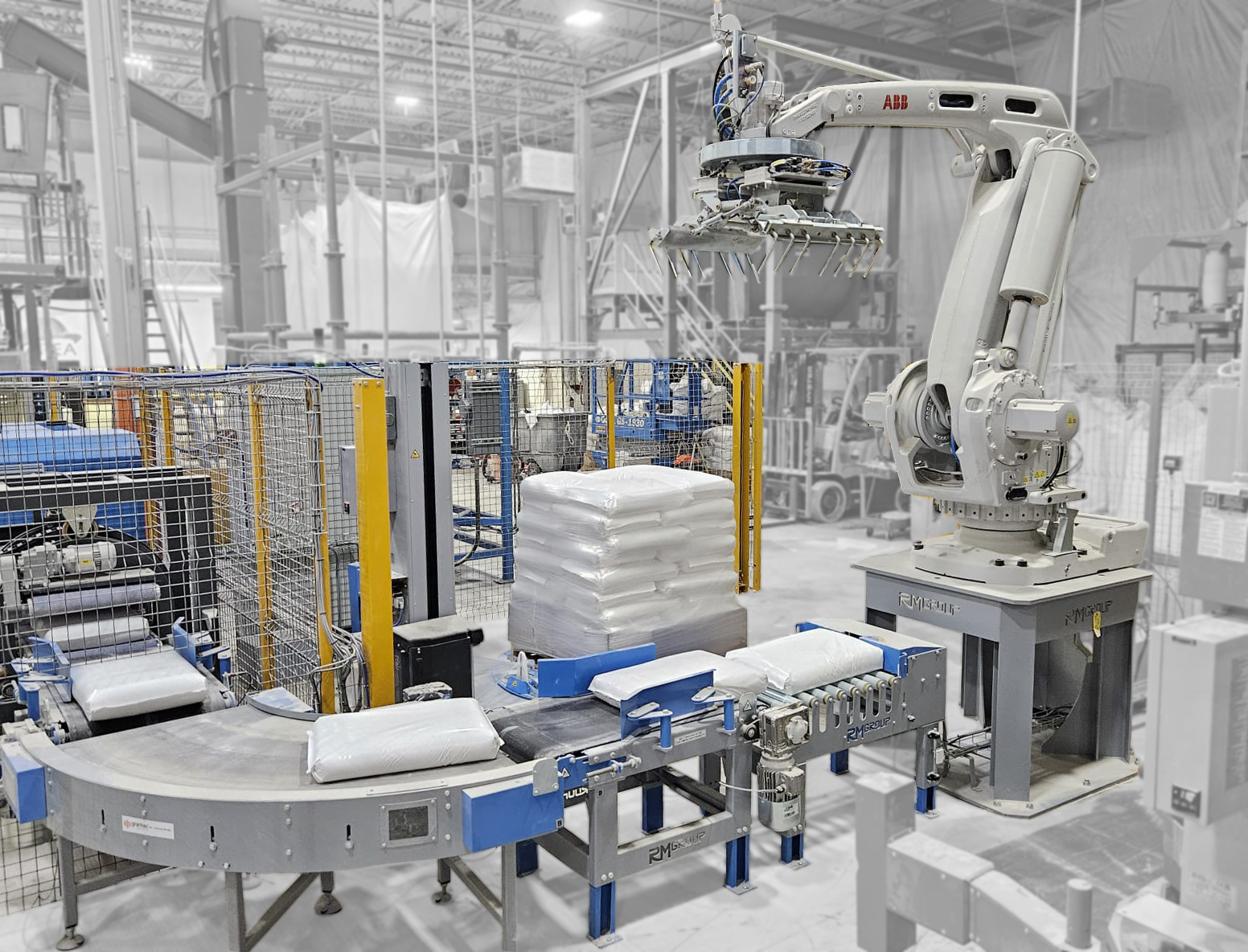
A survey from PwC has predicted that automation in manufacturing will double by 2030 as a result of manufacturers investing more into upgrading their remaining manual production lines into fully automated ones.
From pick and place robots to AGVs, there are several areas of your production line you can begin to invest in. However, if you work in industries such as:
Your line will greatly benefit from automating your bagging process with a form, fill and seal machine. In this guide, our experts will explore what a form, fill and seal machine is, how it works, and why you should choose this packaging solution.
What Is a Form, Fill & Seal Machine?
A form, fill and seal machine is an automated system that builds packaging from a flat roll of film and automatically fills and seals your product inside, ready for palletising or shipping. This is different from manual bagging as it requires minimal human intervention, creating a safer and more productive production line.
There are two types of form, fill and seal machines: vertical and horizontal. Vertical form, fill and seal machines utilise a vertical drop, whereas the horizontal machine uses a flat conveyor to package products. Which you have on your production line depends on your floor space and the fragility of your goods.
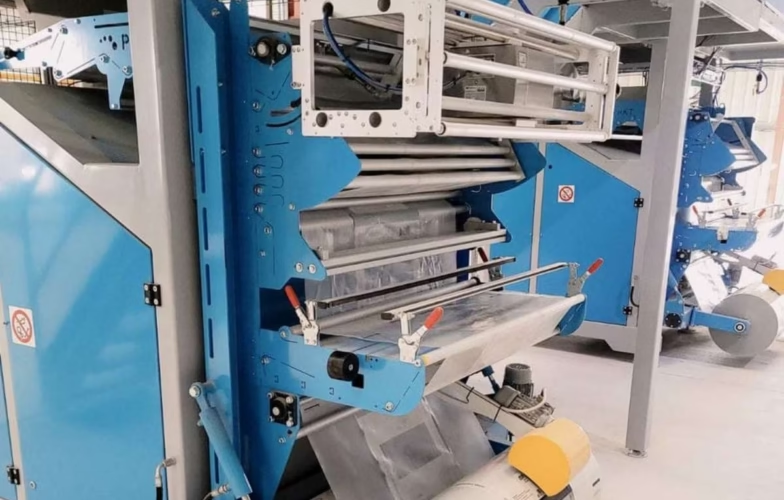
How Does a Form, Fill & Seal Machine Work?
Step 1: Film Is Fed Into the Machine
The process starts with the machine continuously unwinding and rolling out the packaging film. Being guided through rollers, the film is put under tension, keeping it steady and correctly aligned before forming begins.
Step 2: The Bag Is Formed
Next, the taut film is wrapped around a forming tube to create the desired shape and size of the bag. Heated strips are then used along the overlapping edges of the bag to seal the packaging to ensure no holes.
Step 3: Product Is Weighed & Filled
Utilising pre-determined metrics, the form, fill and seal machine will use an integrated weight system to drop a precise amount of your product into the bag. Manual production lines are susceptible to human error; the machine ensures accuracy every time.
Step 4: The Bag Is Sealed
Heated sealing jaws are used to create a longitudinal seal, and a horizontal jaw seals the top of one bag while simultaneously creating the bottom seal of the next. This helps to prevent leaks and spills across the production line and during shipping.
Step 5: Finished Bags Leave the Machine
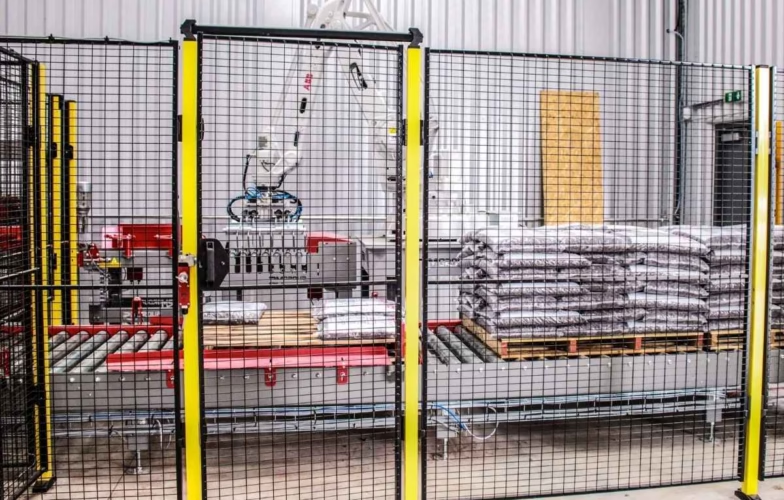
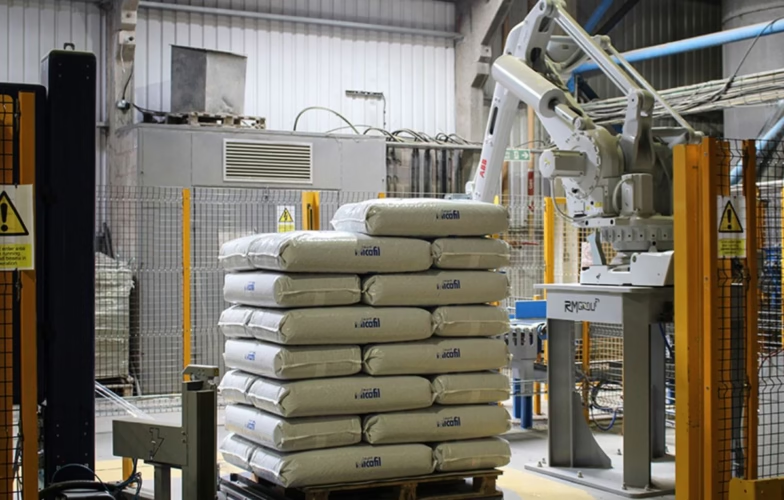
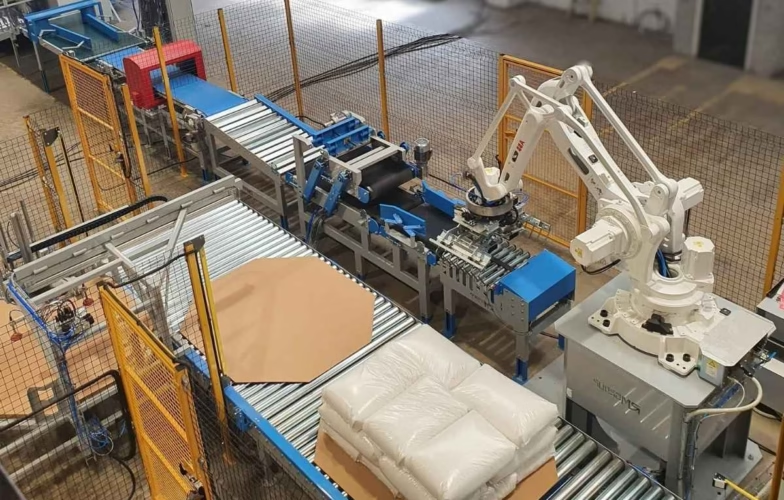
Finally, once the bag is sealed, a conveyor belt will transport the product to the next stage of your production line, such as the robotic palletiser, ready for storage or distribution, creating effective end-of-line automation.
What Products Can Form, Fill & Seal Machines Package?
Form, fill and seal packaging machines are very versatile and can be tailored to produce different bag sizes and withstand different weights to support a wide variety of products, including:
- Aggregates
- Fertilisers and chemicals
- Compost, soil and bark
- Animal feed
- Food, e.g. grain, rice, coffee, flour, sugar
- Plastic polymers
- Wood pellets
The possibilities of these machines are endless. To discuss a bespoke packaging solution for your production line, get in touch with the team today.
What Are the 5 Benefits of Using a Form, Fill & Seal Machine?
1. Increased Production Speed
A report from McKinsey has projected that in the next 50 years, automation will improve productivity by 2.8% annually. This is because automated systems such as form, fill and seal machines allow for continuous automation, resulting in a higher output.
2. Lower Packaging Costs
By utilising film automation rather than pre-made bags, the machine can create a bespoke solution for your product, ensuring zero waste material and reducing labour costs, saving your business time and money.
3. Greater Weighing Accuracy
Similarly, form, fill and seal machines provide accuracy, meaning your bags will always be consistently filled, and there will be less product giveaway, which will also help ensure better ROI.
4. Improved Consistency
Appearance matters; it helps your customers to see the value in the product and supports your brand image. Form, fill and seal machines make sure your bags are uniform and that the seals are reliable, supporting your reputation.
5. Reduced Downtime
Downtime can affect your revenue and customer satisfaction. With automated systems, especially fully integrated ones, productivity increases alongside accuracy and consistency, especially if your system supports remote operations.
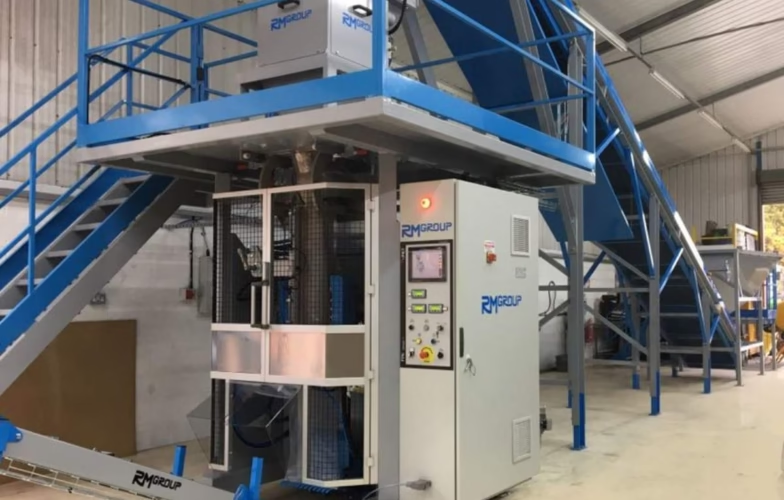
Why Choose RMGroup’s Form, Fill & Seal Systems?
RMGroup has been designing, installing and maintaining automated systems for over 30 years. During that time, we’ve built a strong reputation for our high-quality automations, rapid response time, and skilled team of engineers.
In our UK-based HQ, we can create bespoke solutions for your production line, including form, fill and seal machines. With capabilities of handling materials from 1kg to 500kg, our robust construction and efficient system streamline your production line, allowing for a more efficient bagging process.
Get in touch with us today to learn more about our form, fill and seal machinery offering.