Blog
Upgrading a Manual Production Line to Fully Automated: What to Expect
18 July 2026 · Back to the blog

Manufacturers are under increasing pressure to produce more, maintain quality standards and remain competitive. At the same time, customers expect shorter lead times, greater product consistency and complete traceability throughout the production process.
To meet these demands, many manufacturers are re-evaluating traditional production methods and investing in automation.
With more than 540,000 industrial robot installations worldwide in recent years, automation is no longer limited to large-scale manufacturers. Businesses of all sizes are adopting automated assembly machines and robotic systems to improve productivity, quality, and profitability.
For organisations considering manual assembly line modernisation, understanding what to expect from the transition process is essential.
In this guide, we explore how automated production lines work, why manufacturers are investing in automation, and the key stages involved.
What Is an Automated Assembly Line?
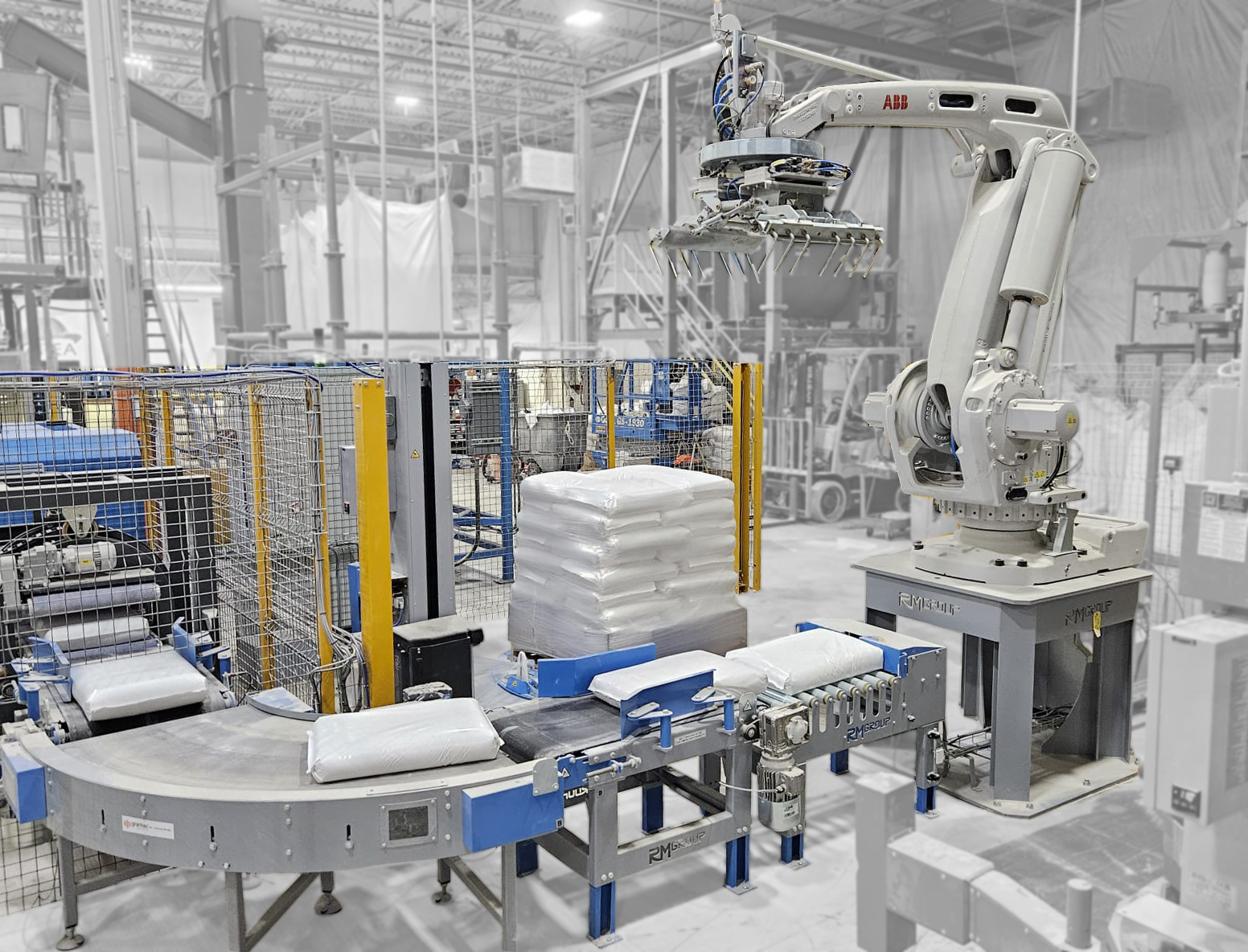
An automated assembly line is a production system in which machinery, robotics, sensors, and software controls perform manufacturing and assembly tasks with minimal human intervention.
Rather than relying on operators to manually move, assemble, inspect, or package products, automated systems coordinate these activities through integrated equipment.
While some facilities operate fully automated lines, many manufacturers begin with semi-automated systems that combine human expertise with automation technologies. This allows businesses to modernise gradually while retaining flexibility for more complex tasks.
Automated assembly lines are widely used across sectors including food and beverage, pharmaceuticals and e-commerce fulfilment. As automation technology becomes more accessible, organisations are adopting automated assembly machines.
Why Manufacturers Are Investing in Manual Assembly Line Modernisation
Manufacturers are investing in manual assembly line modernisation not simply to reduce labour requirements, but to create more resilient and scalable operations.
As production demands grow, automation is becoming a strategic investment that enables businesses to improve productivity, with research suggesting robotics can deliver productivity improvements of up to 22% in manufacturing environments.
Investing in automated assembly lines can help by:
- Increasing productivity and throughput
- Improving quality and consistency
- Addressing labour shortages
- Enhancing workplace safety
- Supporting long-term growth
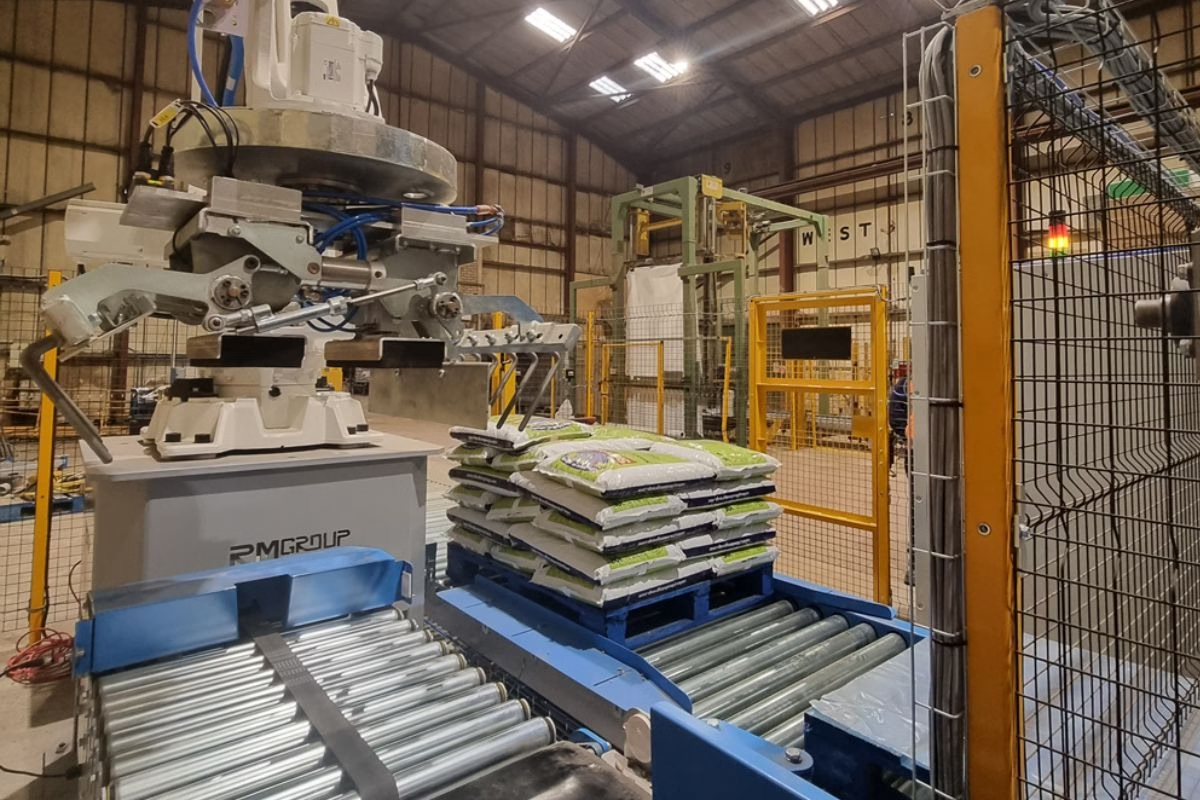
Evaluating the Right Manual Assembly Line Solutions for Your Facility
Before introducing automated assembly machines, manufacturers should audit their existing manual processes or seek expert consultancy. This will help to pinpoint bottlenecks, high error rates, or tasks with excessive labour costs.
Modernisation efforts should focus on repetitive, high-volume, or hazardous tasks where robotics can replace manual assembly line solutions to maximise ROI.
Some may opt for semi-automated systems that support human workers, while others may require a total transition to a robot assembly line for maximum benefits. It depends on the facility’s needs.
Decision-making must be guided by practical constraints. These might include budget, available floor space, product complexity, and required production volumes.
Collaborating with experts ensures that the selected industrial automation systems are tailored to the specific operational environment and future-proofed for growth.
From Manual Processes to a Robot Assembly Line: What the Upgrade Process Looks Like
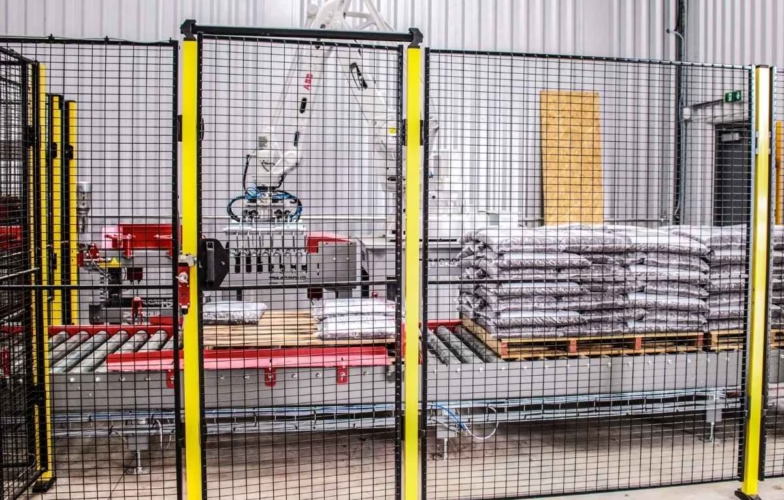
Transitioning from manual assembly-line solutions to a fully robotic assembly line is a phased journey. It requires careful coordination between your team and automation specialists.
Understanding each stage helps manage expectations and ensure a smooth modernisation process:
- Initial consultation and feasibility assessment: Specialists evaluate the physical floor space, product complexity, and production volumes to determine if a fully automated or semi-automated system offers the best ROI.
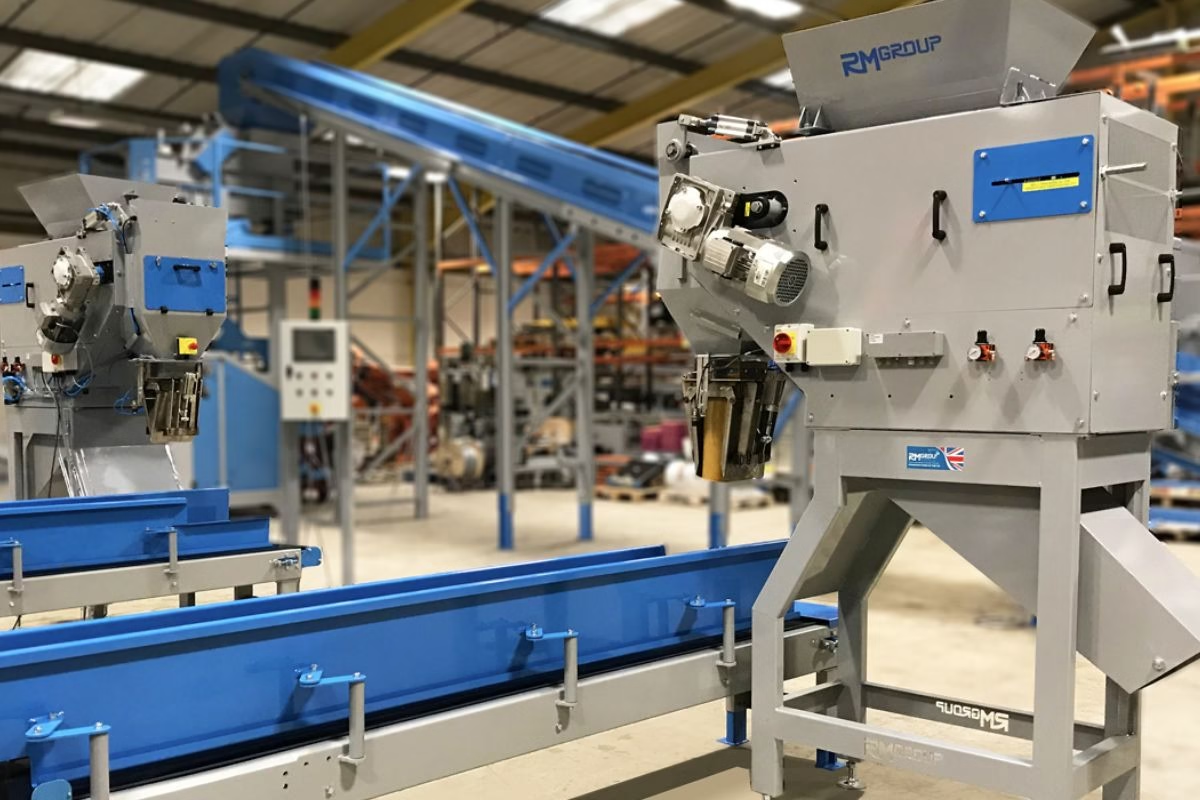
- System design and engineering: Based on the assessment, engineers design a bespoke solution. This includes selecting the right combination of conveyors, robotics, sensors, and machine vision systems tailored to the specific operational environment.
- Integration of automated assembly machines: This phase involves integrating new hardware with software controls to ensure all components of the automatic system communicate effectively, paving the way for seamless data collection and performance monitoring.
- Installation and testing: Physical installation is followed by rigorous testing to ensure the line meets quality consistency standards and safety requirements before it goes live.
- Staff training and ongoing support: As manual tasks are replaced, workers are upskilled for higher-value roles. Ongoing service support and preventative maintenance also play a vital role in ensuring automated systems continue to operate reliably.
While timelines vary by complexity, manufacturers should expect a structured rollout designed to minimise downtime and build a future-ready production line.
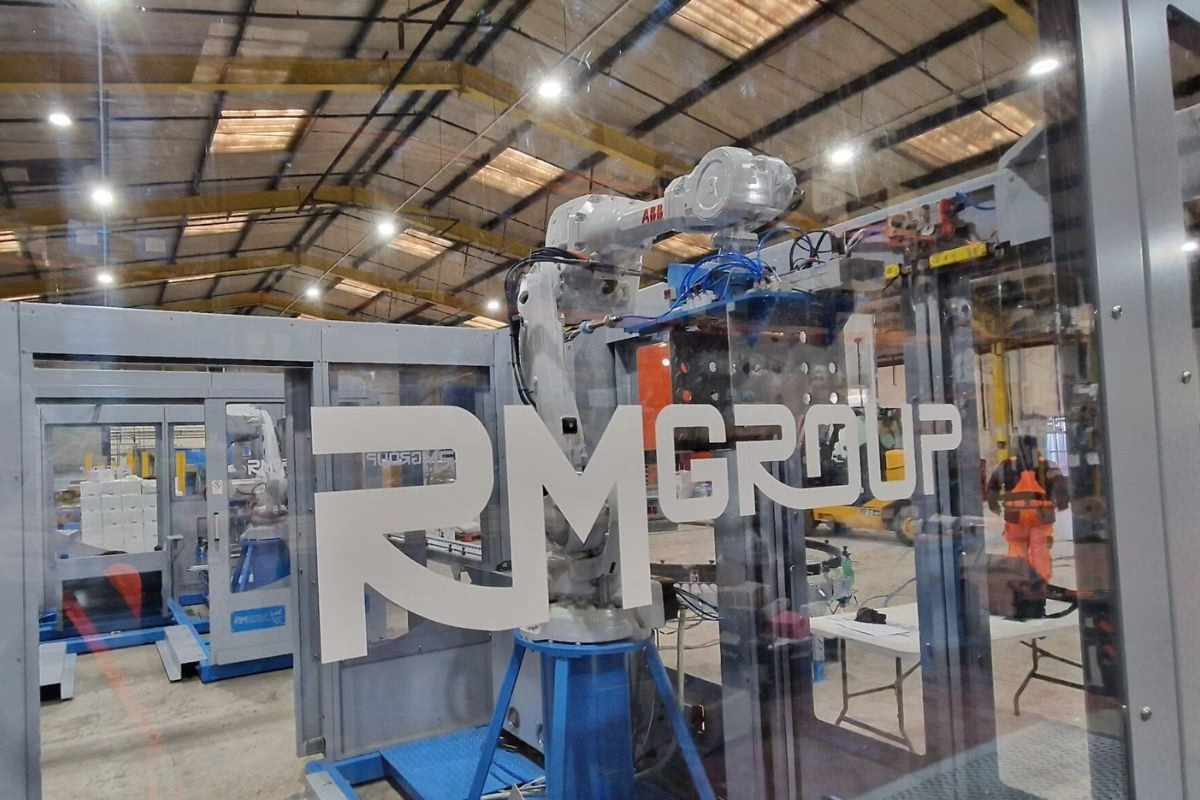
What to Expect from Automatic Industrial Automation Systems After Implementation
Manufacturers can expect transformative shifts across their operations once the transition is complete.
Automation enables continuous, high-speed operations that significantly outperform manual processes. Research suggests that 93% of Lighthouse factories reported growth benefits from their automation investments.
Modern automated lines provide real-time operational visibility. Intelligent software controls detect faults as they occur and provide valuable data insights that refine processes and support better decision-making.
Although they require significant initial investment, these systems deliver substantial long-term cost savings through reduced waste, less product damage and higher revenue per employee.
Building a Future-Ready Production Line
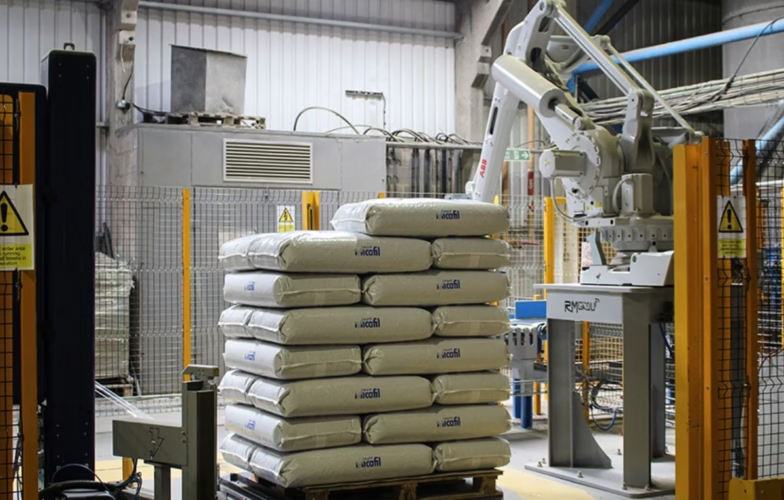
Transitioning to a fully automated production line addresses the most pressing challenges in modern manufacturing. By integrating robotic assembly systems and automated packaging, manufacturers can achieve productivity improvements and ensure consistency and precision that manual processes cannot match.
Successful modernisation requires careful coordination between your internal team and automation experts to ensure that the chosen solution is bespoke to your facility‘s physical constraints and production volumes, avoiding the risks of fragmented systems and operational disruption.
As manufacturing becomes increasingly automated, standing still is no longer a viable option for UK manufacturers aiming to remain competitive in a global market.
At RMGroup, we specialise in making automation accessible and commercially effective.
Ready to transform your production line? Contact us today to start your automation journey with our expert guidance.