Blog
Why Are Robotics Used in the Food & Beverage Industry?
5 June 2026 · Back to the blog
The modern manufacturing landscape has seen a rapid acceleration in the adoption of automation. With more than 542,000 industrial robots installed globally in 2024, it’s clear that the future of manufacturing lies in advanced robotics.
Increasing pressures on the food and beverage industry demand solutions that address several areas. Demand for greater efficiency is rising to maximise throughput, minimise waste, and maintain competitive pricing.
Hygiene and safety standards, such as BS EN 1672‑2, require strict processes to eliminate risks in food manufacturing. While achieving quality in mass production is more important than ever and requires repeatable actions, staff often struggle to maintain it during lengthy shifts.
Robotics has emerged as a technological solution to these challenges. By offering speed and accuracy, automation is transforming how food and beverages are handled, packaged and prepared for distribution.
The pace of adoption continues to accelerate globally. 70% of all newly deployed industrial robots in 2023 were installed in Asia, highlighting the scale of investment in automation technologies.
Understanding Robotics in Food Manufacturing
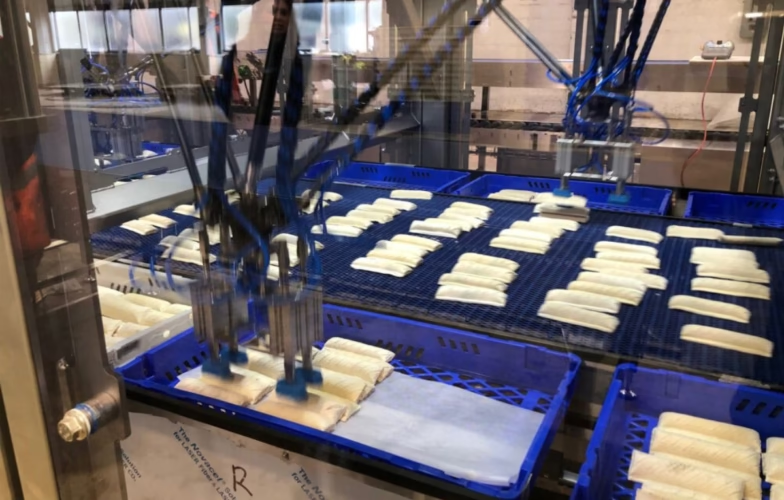
Robotics refers to the use of automated machinery to perform manufacturing tasks. In the food and beverage industry, these systems are specifically designed to handle delicate products. All whilst operating in demanding environments and maintaining hygiene standards required for food safety.
The integration of automated systems is revolutionising food and beverage manufacturing. It addresses challenges such as labour shortages, increasing consumer demand, and the need for rigorous quality control.
Key systems commonly used within the industry include:
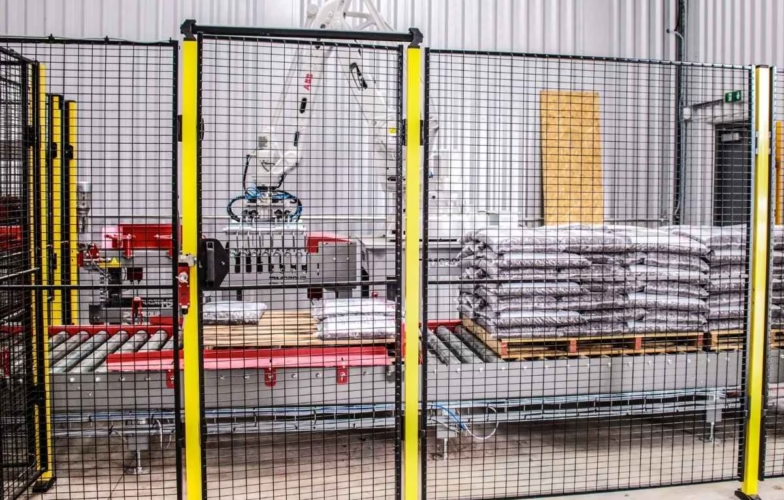
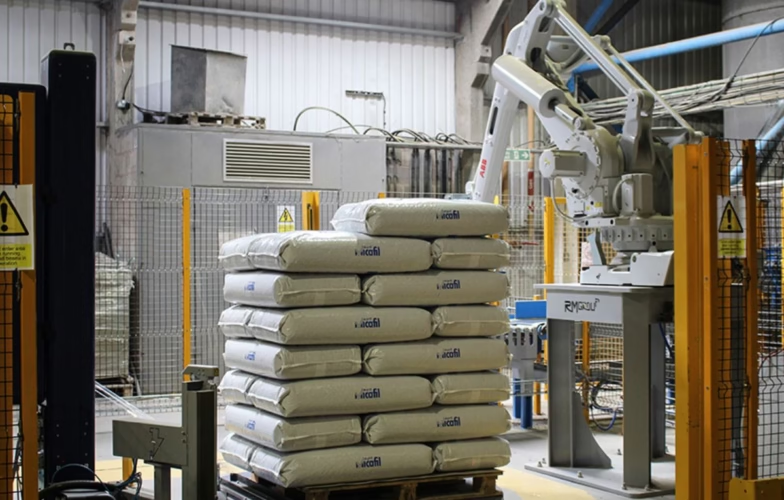
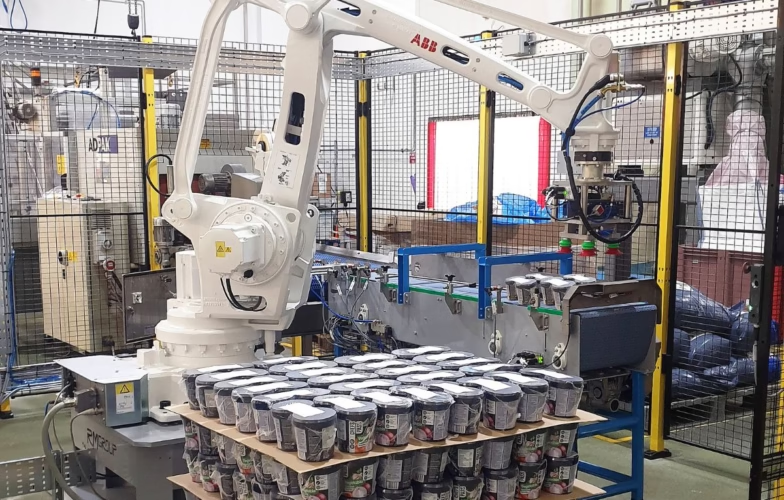
- Robotic palletisers
- Pick-and-place robots
- Packaging robots
- Conveyor automation systems
The true value of robotics is realised through seamless integration. Robotics isn’t simply about replacing a single manual task; it’s about creating a fully connected, efficient and traceable production system capable of delivering consistent performance at scale.
The Main Reasons Robotics Are Used in Food Production
Improved Hygiene and Food Safety
Maintaining hygiene standards and compliance is a top priority in food manufacturing. Robotics significantly reduces direct human contact with products, lowering the risk of contamination.
Increased Production Speed
Automation allows manufacturers to achieve higher throughput levels than manual processes. Robotic systems can operate continuously with minimal downtime. This increases productivity across operations.
The US food and beverage industry increased robot installations by 25% in one year, demonstrating growing industry demand for faster production.
Greater Accuracy and Consistency
Consistency is essential within the food and beverage industry. Robotic systems deliver precise movements, ensuring uniform product handling, packaging accuracy and pallet configuration. This consistency reduces product damage, improves quality control, and supports stronger brand presentation throughout the supply chain.
Labour Shortage Solutions
Research from Deloitte and The Manufacturing Institute highlights severe long-term labour shortages in manufacturing. This means that manufacturers are facing increasing pressure to find sustainable solutions.
Robotics can help address these challenges by automating repetitive processes while allowing existing employees to focus on higher-value responsibilities such as supervision, maintenance and quality assurance.
Rather than fully replacing human workers, automation is increasingly being used to support and strengthen the workforce.
Reduced Operational Costs
Although robotic systems require an initial investment, they often deliver substantial long-term cost savings. Increased efficiency, reduced waste and less product damage all contribute to improved profitability.
Why Robotic Palletising Is Growing in Popularity
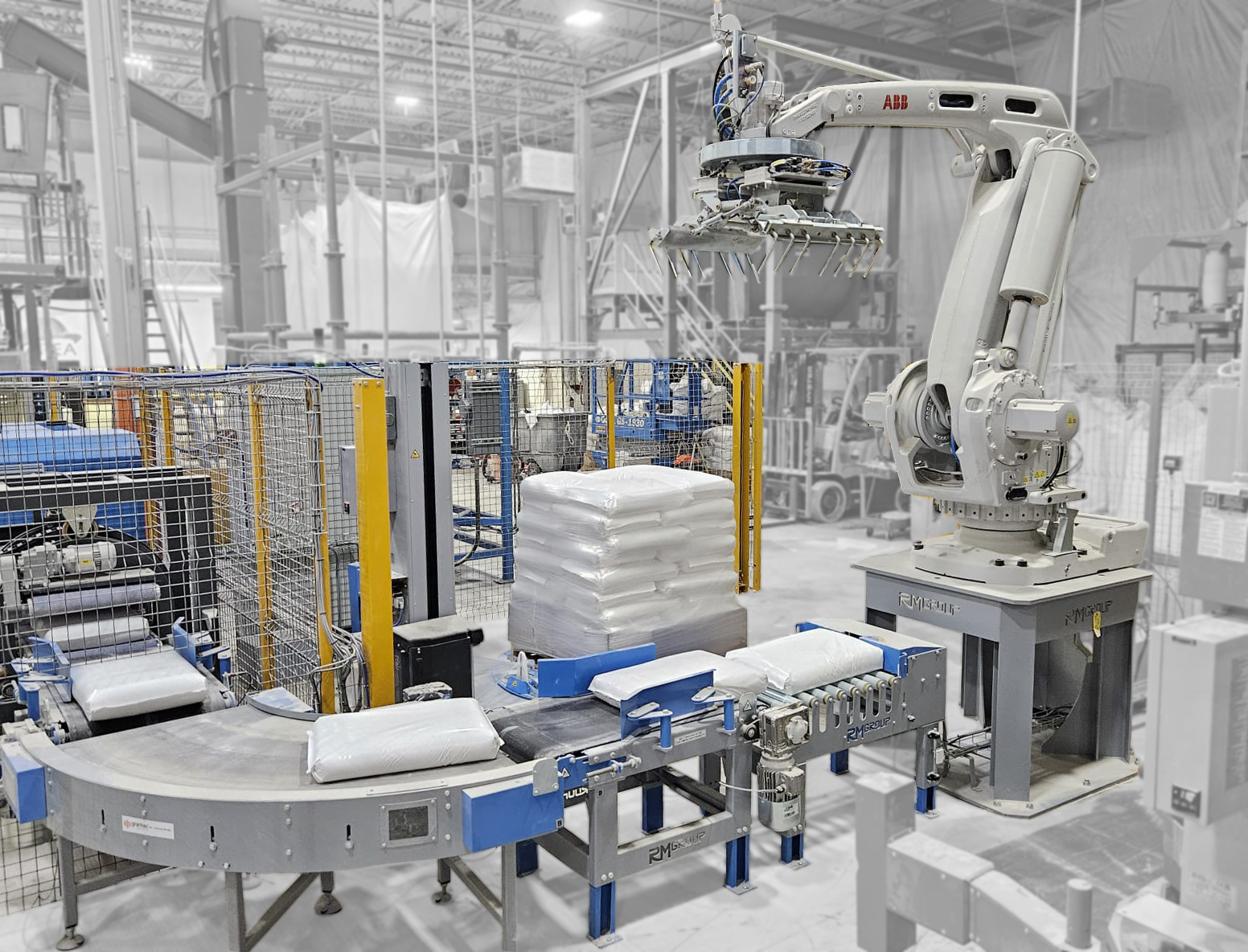
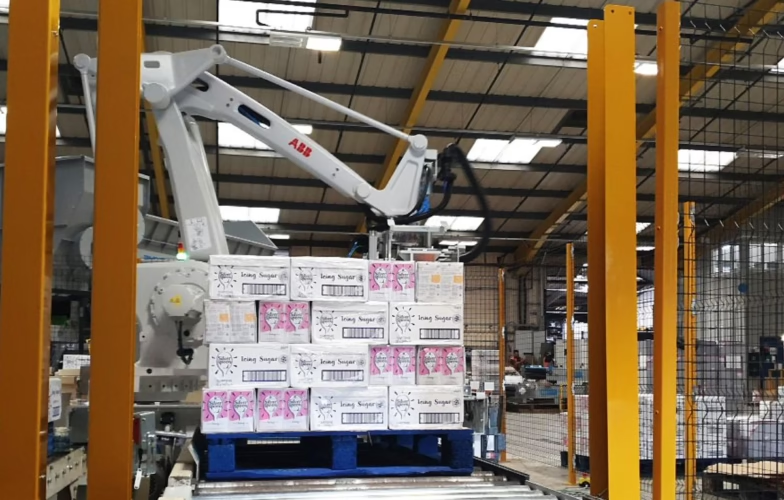
Robotic palletising has become one of the most widely adopted forms of automation in the food and beverage industry because of its efficiency, flexibility, and reliability.
Robotic systems are designed to maximise the use of available floor space while maintaining high throughput. Their footprint makes them ideal for facilities with limited operational space.
Automated palletisers operate continuously at high speed, significantly outperforming manual pallet loading processes. This allows manufacturers to improve productivity while reducing the physical strain placed on employees.
These systems can be programmed to handle different product sizes, weights and packaging formats. Modern palletising systems are designed to integrate seamlessly into existing production lines.
Are There Any Challenges With Food Manufacturing Robotics?
While adopting automated systems offers substantial benefits, it can also involve several challenges.
The most significant barrier is often the initial investment required to purchase and install automated robotic systems. Smaller manufacturers may find these upfront costs challenging without long-term planning.
Workforce training is another important consideration. Employees must be trained to operate, monitor and maintain automated equipment effectively to maximise performance and minimise downtime.
Integrating robotics into existing production environments can also be technically complex, particularly in older facilities where infrastructure may need modification.
Despite these challenges, the return on investment outweighs the initial expense for many manufacturers.
Why Robotics Continue to Transform the Food and Beverage Industry
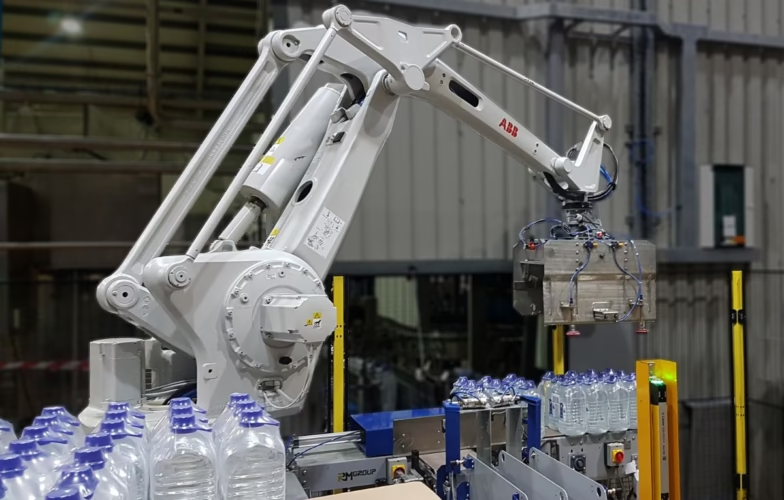
The advantages of robotics within the food and beverage sector continue to drive widespread adoption across global manufacturing markets.
Robots can operate continuously without fatigue while maintaining exceptional speed, precision and consistency. This enables manufacturers to significantly improve productivity, reduce waste and maintain strict quality standards.
Automation strengthens food safety by reducing contamination risks and supporting compliance with regulatory requirements. At the same time, robotics can improve workplace safety by removing employees from physically demanding and potentially hazardous tasks.
These robotic systems provide the scalability and flexibility required in a rapidly evolving manufacturing industry. As consumer demand changes and production requirements shift, automation allows manufacturers to adapt quickly while maintaining efficiency.
For food and beverage manufacturers looking to improve productivity, safety, and long-term operational resilience, robotics and automated machinery are becoming a necessity.
At RMGroup, we specialise in advanced robotics and automation. Explore our range of food and beverage systems or contact us to discuss your operational requirements.