Blog
Automated Palletising for Food and Beverage: Where to Start
6 November 2026 · Back to the blog
Palletising is one of the most physically demanding jobs at the end of a food and beverage line. It’s repetitive and requires consistency. It’s often where throughput gets held up when volumes rise.
Many manufacturers know they should look at automation but aren’t sure whether their line suits it, or whether palletising is the right place to start. The good news is that the first step isn’t buying a robot. Instead, it’s working out where automation makes sense for you.
In this guide, we’ll explore how to tell whether automated palletising for food and beverage suits your line, what makes the sector different and where to start.
Is your line a good candidate for automated palletising?
Food palletising is a good place to start with an automation project, because the task is repetitive. Here are some common signs it’s worth exploring:
- Your team lifts and stacks cases, trays or sacks for most of the shift
- You’re having recruitment difficulties
- Palletising limits how fast the rest of your line can run
- Your pallets are inconsistent and vary in quality, stability or stacking pattern
- You’re expecting higher volumes or new products in the future
Manual handling is a health issue as well as a productivity issue. HSE estimates that 511,000 workers in the UK were affected by work-related musculoskeletal disorders in 2024/25. Repetitive lifting and stacking are tasks that can contribute to them. Automating that work can take your team out of the most physically demanding part of the line.
What makes food and beverage palletising different?
Though every industry has its own unique demands, food and beverage has a few that are particular to the sector:
- Pack variety: Cases, trays, multipacks and tubs all behave differently on a pallet
- Product mix: The number of lines you run and how often they change, including seasonal and promotional packs
- Environment: Temperature, hygiene and cleaning requirements in the area the equipment will sit in
- Labelling and traceability: How pallets are labelled and recorded
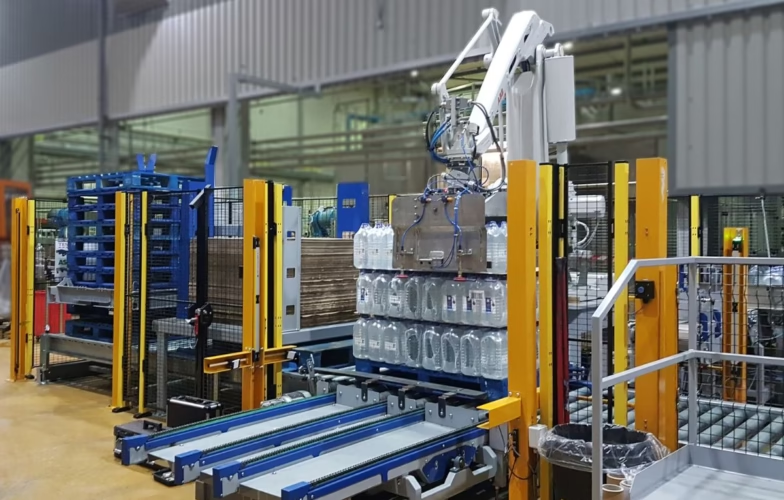
Pack types, pallet patterns and your requirements all shape how a food palletising cell is designed.
Where does palletising fit in your wider automation plans?
Palletising sits at the end of the chain. Automating one stage affects the others, so it helps to consider the whole line before making any decisions.
A good rule is to start with the biggest bottleneck or the highest manual handling risk. In some cases, it makes sense to combine stages, such as combined case filling and palletising, or pairing a palletiser with case erectors so the product flows smoothly between machines.
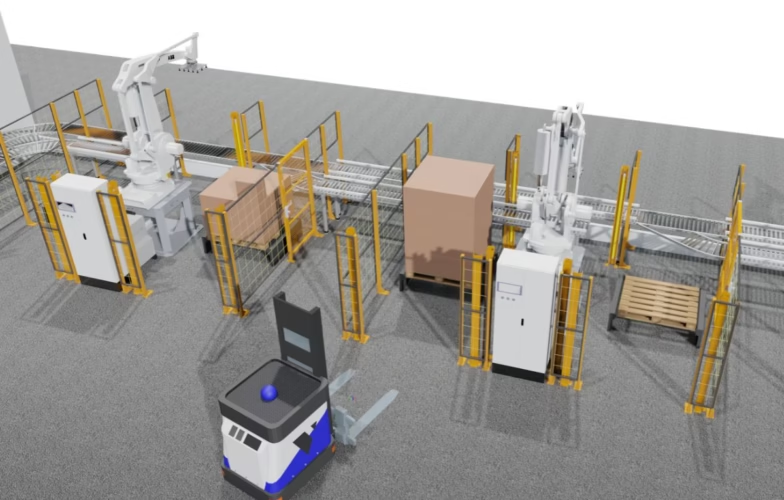
It’s also worth looking beyond the line. Food and beverage warehouse automation covers how finished pallets move to wrapping, storage and dispatch, and whether AGVs and AMRs could connect the two later. You don’t need to implement everything at once, but planning now keeps your options open as your food and beverage automation grows.
How do you build the business case?
A clear business case makes the project easier to scope and justify. Start with what you want to achieve. This likely includes the amount of manual handling required, throughput, and better consistency.
If you’re looking for a view of return on investment, gather your current labour and handling costs, end-of-line downtime, and growth plans. It also helps to involve other departments, such as operations and health and safety teams, at this stage. That way, everyone has some input before decisions are made.
If the upfront costs feel significant, finance and leasing can help spread them. Impartial advice is also available through the Robotics Pathway Hub, which we’re proud to be a part of.
What should your first steps be?
Our guide on what to prepare before approaching a supplier covers the full checklist. Here’s a simple way to start:
- Check your readiness: Use the signs above to decide whether palletising is the right first step
- Gather the basic information: Products, pack format, pallet types and the available space
- Speak to an integrator early: A good supplier will help you fill in the gaps
The first conversation might include a site visit and feasibility discussion, which is where our consultancy service can help.
Ready to explore automated palletising?
The first step towards automated palletising for food and beverage is understanding your products, your line and your goals. It also pays to think about what the line might need in future, and what happens if it stops.
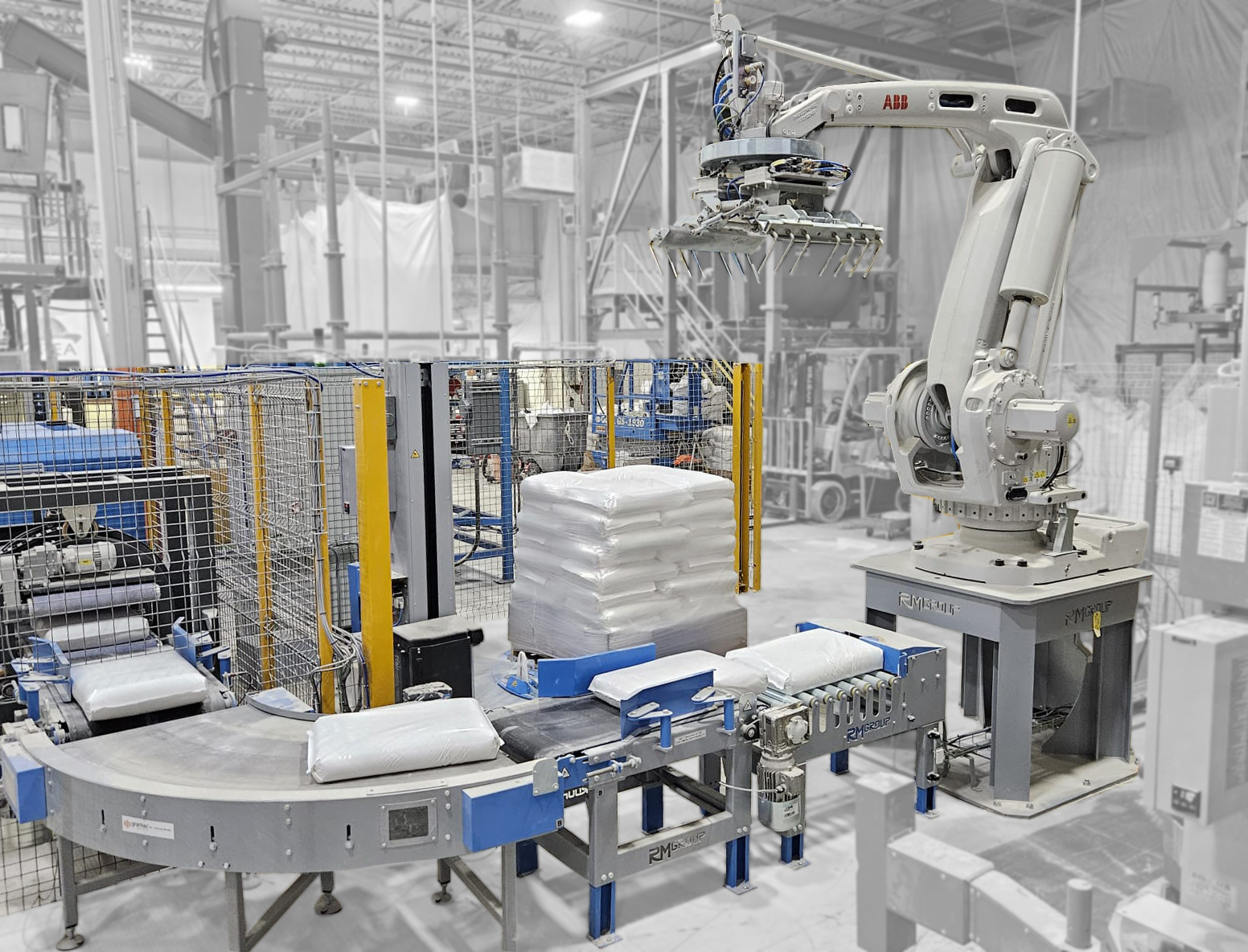
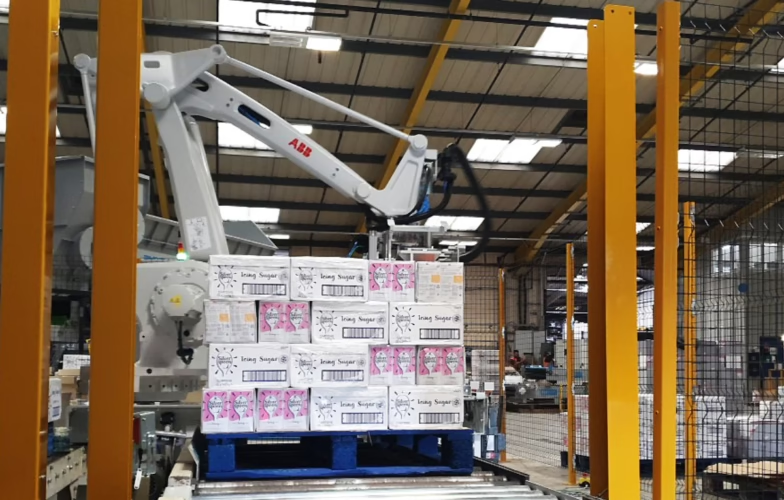
When British Sugar’s existing palletising robot suffered an irreparable breakdown, they needed to get their packaging line back into production quickly. As an existing customer, they came to us, and we fitted and commissioned a replacement ABB IRB 460 within three weeks of the order.
Our robot stock and available programming engineers helped, and we set up the system to their product and palletising specifications within days. The robot was chosen for the future as well as the present. The line needed 20 bags per minute from day one, with the option to reach 22 later.
Whether you have a full specification or just an idea and a list of questions, we’re happy to help. Get in touch with our team to talk through your palletising project.