Blog
Inside a Robotic Palletiser Project: From Consultation to Handover
21 August 2026 · Back to the blog
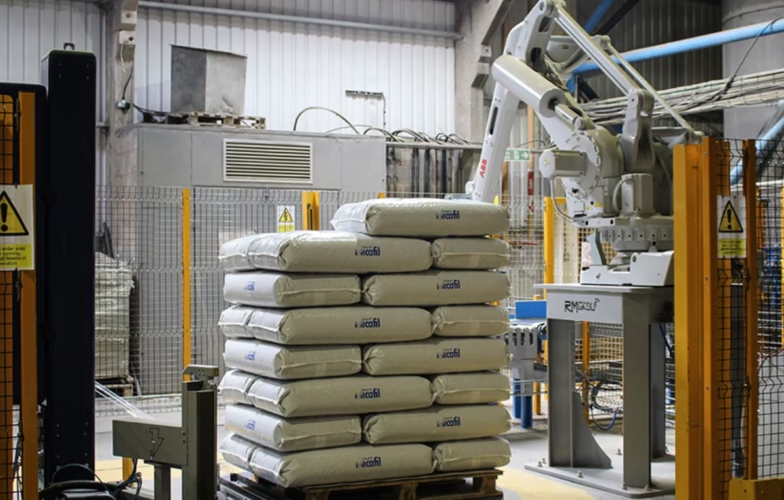
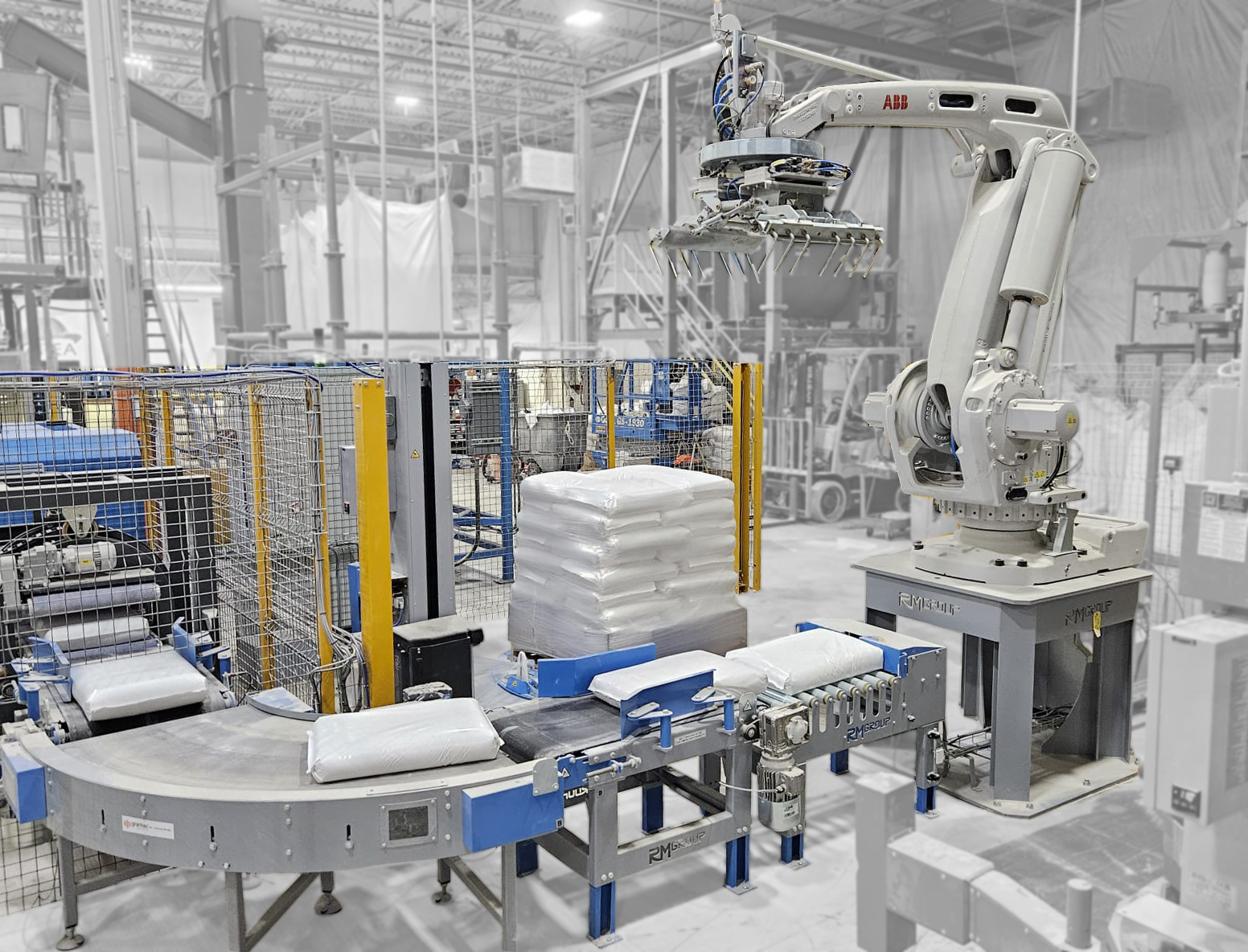
Bringing a robotic palletiser onto your production line involves far more than delivery day. Long before installation begins, there’s a structured process of consultation, design, manufacture and testing that shapes how smoothly robots on the assembly line integrate once they arrive.
This groundwork matters just as much as the installation itself. Projects built around standardised modules tend to move through the process fastest. Bespoke industrial automation and robotics projects generally need more engineering and testing time before despatch.
In this guide, we’ll cover what happens before, during and after your palletising robots arrive on site. Wondering how long installation itself takes? We cover on-site timelines in our companion guide, “How Long Does It Take to Install a Robotic Palletiser?”
The main stages of a robotic palletiser project
1. Consultation and site survey
We review the product range, pack formats, pallet types, required stack patterns, production rate, available footprint, access and utilities. This stage also identifies the best installation window and any work the customer needs to complete before delivery.
2. Concept and detailed design
The cell layout, robot selection, end-of-arm tooling, guarding, conveyors, controls, and safety architecture are developed around the agreed-upon user requirements. Drawings and interfaces are reviewed before manufacture begins.
Safety architecture for our robotic automation solutions is designed with reference to recognised standards. This includes ISO 10218, the international safety standard for industrial robots and robot systems. As an Automate UK member, we also keep pace with the HSE and Automate UK’s joint guidance on collaborative robotics. Published in 2026, the guidance gives the industry clearer regulatory direction.
3. Manufacture and pre-assembly
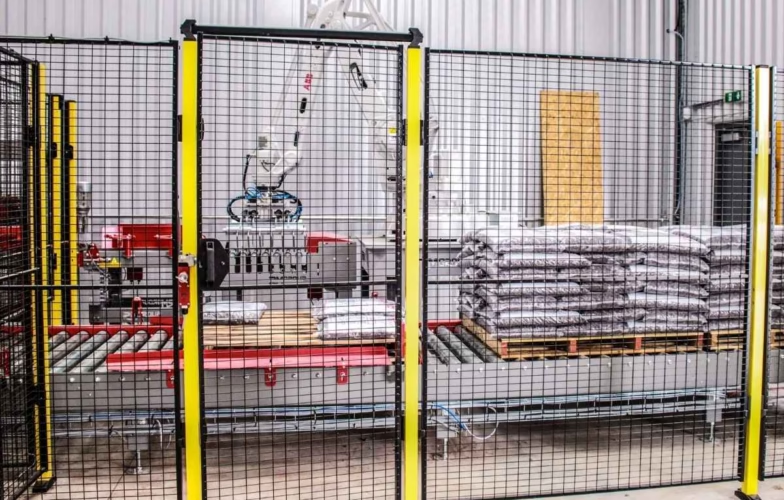
We manufacture and assemble mechanical assemblies, guarding, tooling, control panels, and conveyor modules at our facility. Each palletiser machine and its associated cell is, wherever practical, built in the same configuration in which it will operate on site.
4. Controls integration and programming
Robot programs, PLC logic, safety functions and the operator interface are developed and tested. Pallet patterns and product recipes can also be prepared in advance, reducing the amount of programming required at the customer’s facility.
5. Factory Acceptance Test
Before despatch, the system is tested against the agreed specification using representative products and pallets wherever possible. The Factory Acceptance Test gives the customer an opportunity to see the equipment running, confirm performance and close out agreed actions before installation.
6. Delivery and installation
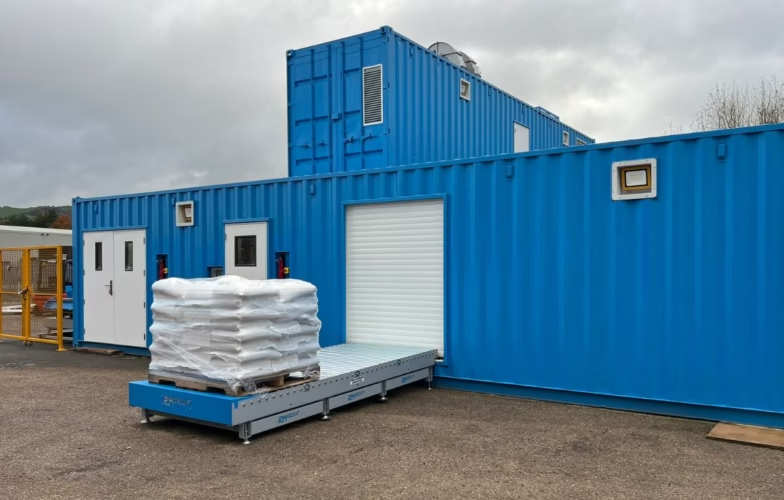
The system is delivered, positioned and mechanically and electrically installed. Connections are made to the production line and site services, with the work sequenced around the agreed access and shutdown plan.
7. Commissioning, validation and handover
We complete live product trials, optimise the process, validate safety functions in line with HSE guidance, and carry out the Site Acceptance Test. Operators and maintenance personnel are trained before the system is formally handed over for production.
How we reduce disruption on site
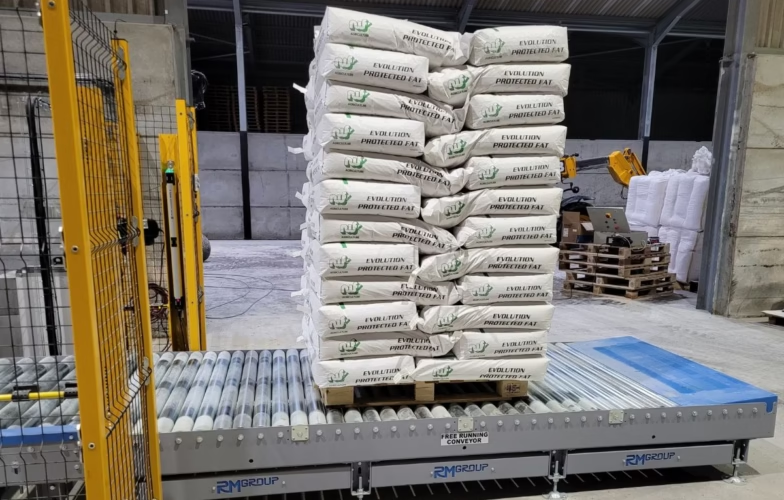
The best way to shorten an installation is to remove uncertainty before the equipment arrives. Our in-house mechanical, electrical, controls, and compliance capabilities across industrial automation and robotics enable us to engineer the complete system as a single coordinated project.
Wherever possible, palletising cells are pre-assembled and tested at our facility before despatch. Representative product trials, structured FAT procedures and early interface checks help identify issues while there is still time to resolve them without affecting the customer’s production schedule.
Before delivery, the project team agrees access, lifting arrangements, utilities, customer responsibilities, production shutdowns and the order of work. This preparation supports a safer, more efficient installation. It also makes the path from delivery to productive operation much clearer.
What happens before the palletiser enters production?
Mechanical installation is only one milestone. Before commercial operation begins, the completed system must be commissioned and demonstrated against the agreed requirements.
The exact handover process is project-specific, but it will normally include live product trials, cycle and throughput checks, confirmation of pallet patterns, safety validation, fault-recovery testing, operator training and maintenance familiarisation.
A Site Acceptance Test then records whether the installed palletiser machine meets the agreed acceptance criteria. Any outstanding actions are documented and managed through to close-out, after which the system can move into routine production with our service and support team available for ongoing assistance.

Plan your robotic palletiser project with confidence
A robotic palletiser project is a coordinated engineering process long before installation day. Defining the scope early, testing thoroughly before despatch and preparing the site in advance all help keep the programme on track.
We design, manufacture, integrate and support robotic automation solutions. Whether you need a proven single-cell solution or a bespoke multi-line installation, our team can develop a system and project plan around your production requirements.
Talk to us about your production line
We’re here to support you from consultation to handover and beyond. Get in touch with our experts on 01686616875 or by emailing sales@rmgroupuk.com.