Blog
Why Automation Works: Lessons from Global Manufacturing Leaders
4 August 2026 · Back to the blog
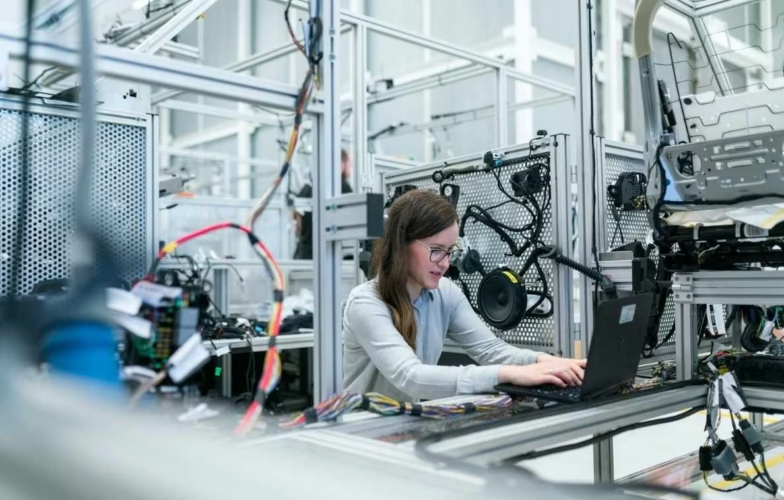
Across the world’s most successful manufacturing economies, automation is not seen as a strategic necessity. While countries like South Korea and Germany lead in automation adoption, the UK currently ranks just 24th globally in robotics density.
Leading nations are demonstrating how automation in manufacturing drives productivity, consistency, and long-term competitiveness.
As global supply chains become more complex and customer expectations rise, manufacturers are increasingly asking: how is automation useful in manufacturing, and why are the most successful economies investing so heavily in it?
The answer lies in measurable performance gains, resilience and scalability.
Germany: Automation Supporting the Mittelstand
One key lesson from global leaders is the focus on SMEs. In the UK, many smaller manufacturers are eager to adopt automation but face barriers, including fragmented support and limited access to digital skills.
Germany’s globally respected Mittelstand (its network of highly productive SMEs) is heavily supported by automation and digital manufacturing. Rather than relying solely on scale, German manufacturers focus on precision, efficiency and innovation.
By integrating robotics, IoT-enabled systems, and applied research through institutions such as the Fraunhofer Institutes, businesses are able to:
- Scale production efficiently
- Maintain consistent quality
- Adapt quickly to market demands
This model highlights how automation in the manufacturing industry enables even smaller firms to compete globally. It also demonstrates the importance of automation in manufacturing process optimisation, where precision and repeatability are critical.
South Korea: Robotics Driving Productivity
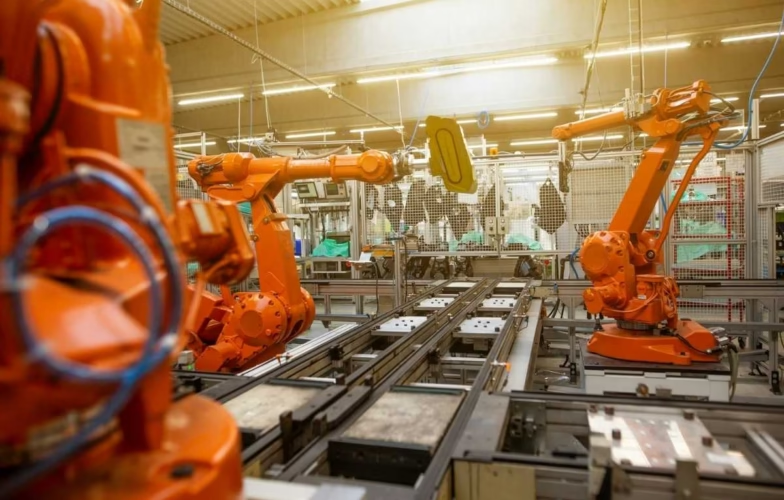
South Korea leads the world in robotics adoption, with more than 1,000 robots per 10,000 workers, which is one of the highest densities globally. This aggressive embrace of manufacturing automation is supported by strong government-backed digitalisation programmes.
These initiatives help SMEs adopt smart factory technologies, resulting in:
- Up to 25% increases in productivity
- Around 27% reductions in manufacturing defects
- Greater operational visibility through data
South Korea provides a clear answer to the question: how does automation improve manufacturing? By reducing human error, increasing output and enabling real-time decision-making.
United States: Scaling Through Advanced Manufacturing Automation
In the United States, automation in manufacturing is driven by the need to scale production while maintaining flexibility. From automotive to aerospace, companies are investing heavily in advanced robotics, AI-driven systems and manufacturing process automation.
Leading manufacturing automation companies are enabling:
- Faster production cycles through robotics and machine learning
- Predictive maintenance to minimise downtime
- Customised production at scale
This approach demonstrates how manufacturing automation solutions can support both mass production and high-mix, low-volume manufacturing, a key competitive advantage in modern markets.
China: Automation for Speed and Global Competitiveness
China has rapidly accelerated its investment in automation in the manufacturing industry as part of its “Made in China 2025” strategy. The focus is on upgrading traditional manufacturing with smart technologies.
By implementing automation in manufacturing processes, Chinese factories are achieving:
- Higher production speeds
- Lower labour dependency
- Improved export competitiveness
China’s strategy highlights how automation is used in manufacturing not just to improve efficiency, but to transform entire industries and move up the value chain.
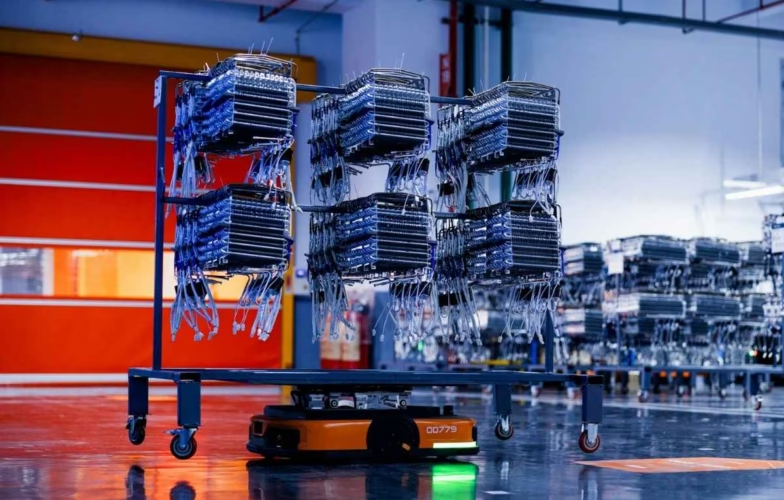
Key Benefits of Automation in Manufacturing
Global manufacturing leaders have shown that automation is a proven driver of efficiency, quality and competitiveness, whether through Germany’s precision engineering, South Korea’s robotics leadership, or the scale of the US and China.
Across these global leaders, the same patterns emerge, combining funding, skills development and long-term policy support to accelerate the adoption of automation.
Regardless of geography, the main benefits of automation in manufacturing include:
- Increased productivity: Machines can operate continuously with minimal downtime
- Improved quality: Consistency reduces defects and rework
- Cost efficiency: Lower long-term operational costs despite initial investment
- Enhanced safety: Automation reduces human exposure to hazardous tasks
- Scalability: Systems can be expanded or adapted as demand changes
These outcomes reinforce the importance of automation in manufacturing processes, particularly for businesses aiming to remain competitive in a rapidly evolving global market.
Why Automation Is No Longer Optional
Manufacturers today face rising labour costs, supply chain disruptions, and increasing demand for precision and speed. In this environment, automation in manufacturing has become essential rather than optional. In the UK alone, closing the automation gap could add £150 billion to GDP by 2035.
Companies that invest in automation in manufacturing gain the ability to:
- Respond faster to market changes
- Maintain consistent output under pressure
- Leverage data for continuous improvement
Despite the benefits, thousands of manufacturers still operate with little to no automation, highlighting a significant opportunity for transformation. Those that delay risk falling behind more agile, technology-driven competitors.
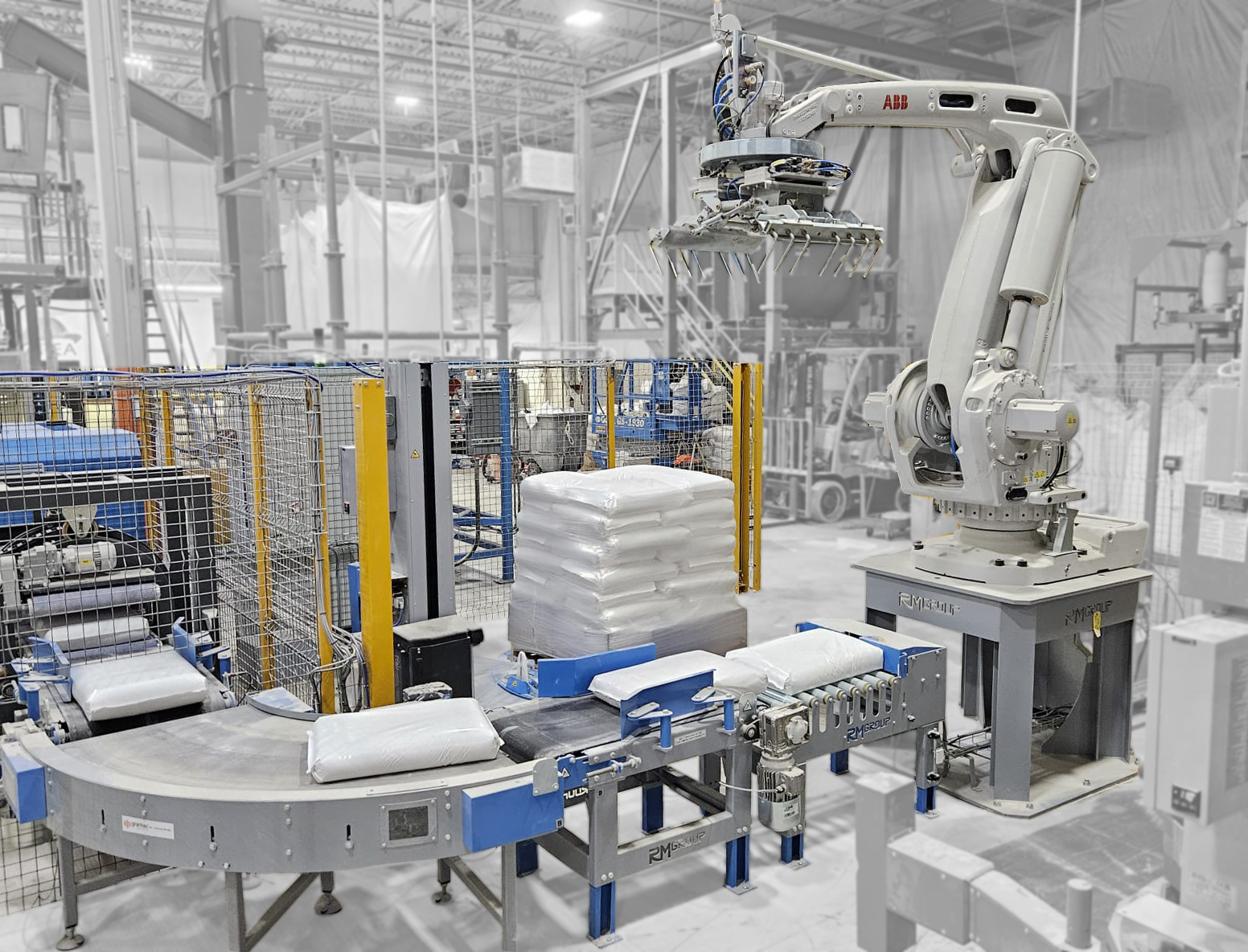
At RMGroup, we believe automation should be accessible and commercially effective. Our role is to ensure that automation delivers real, measurable outcomes for your business.
Get in touch to find out how we can support your transition to automation.