Blog
Product Guide: Does Your Production Line Need Pick & Place Robots?
7 July 2026 · Back to the blog
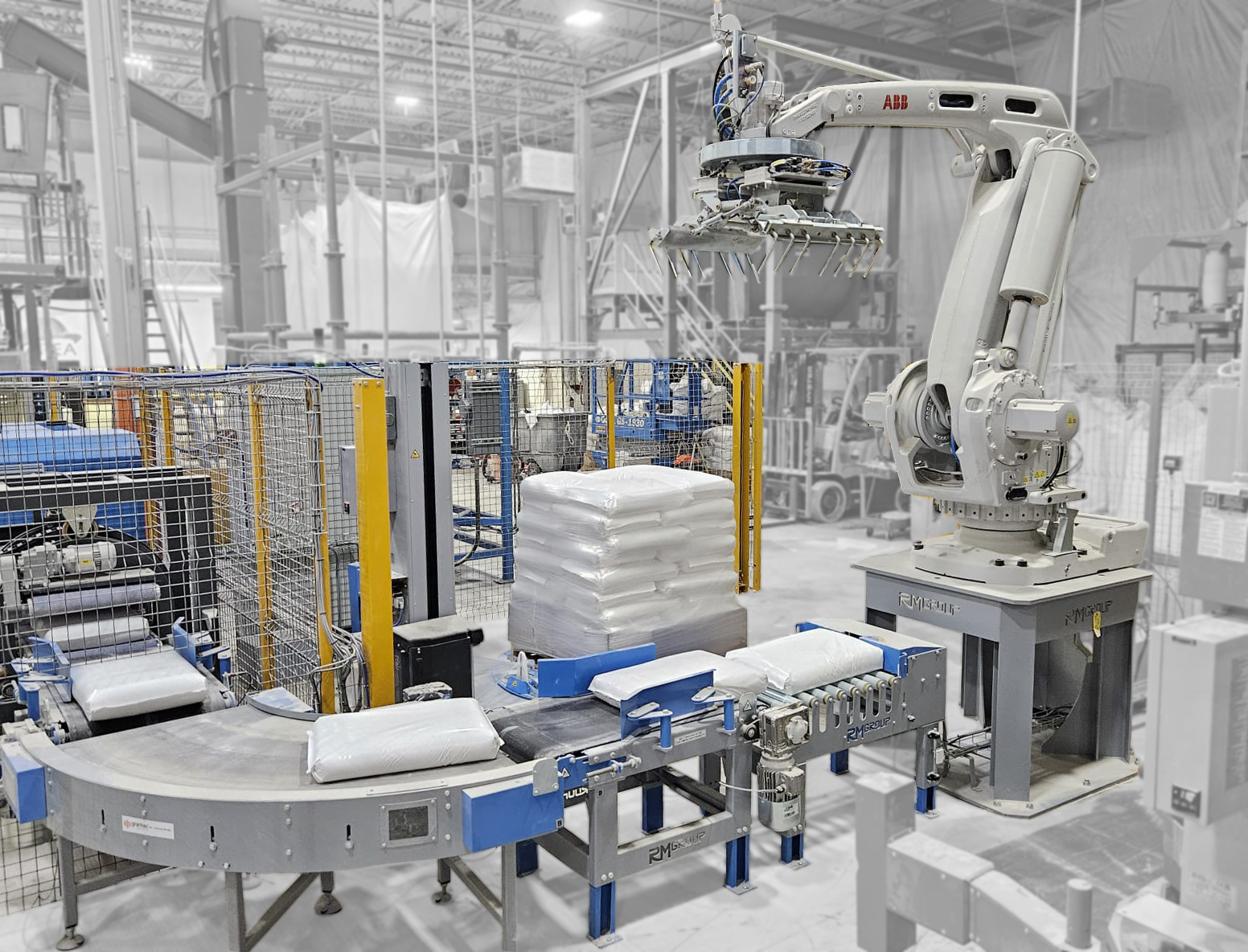
Businesses across the UK have been troubled by rising labour costs and staff recruitment and retention issues, as well as an increased demand for higher output with the same consistent high quality.
This is especially true for manufacturers, who are currently facing the pressures of time and money constraints. As a result, businesses that stay ahead of the curve and adopt automation are able to face these challenges head-on.
One of these automations that supports manufacturers is the pick and place robot. But how exactly does it ensure production line efficiency? In this guide, we’ll explain what a pick and place robot is and how the machine works to help you decide if you need one as part of your production line.
What Is a Pick & Place Robot?
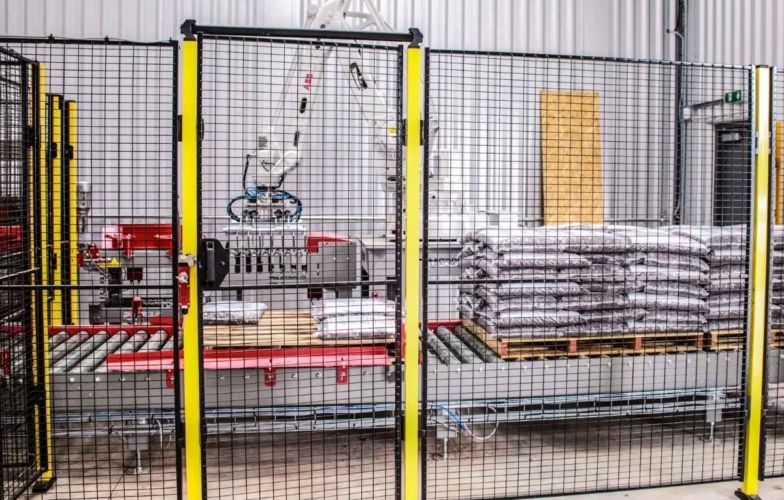
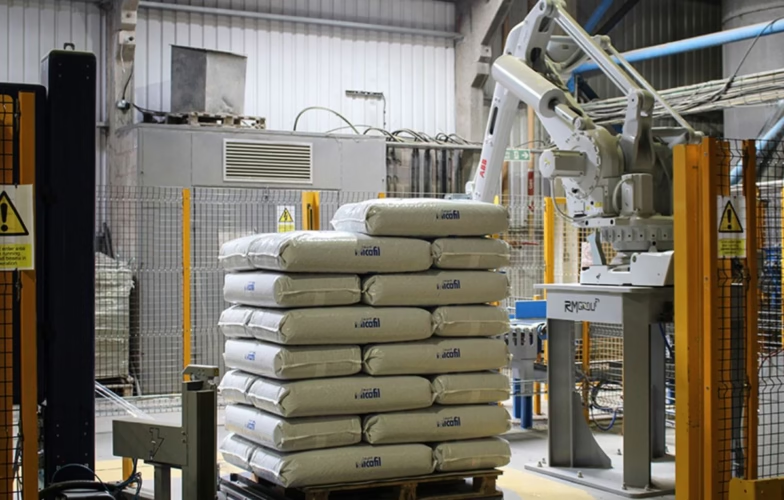
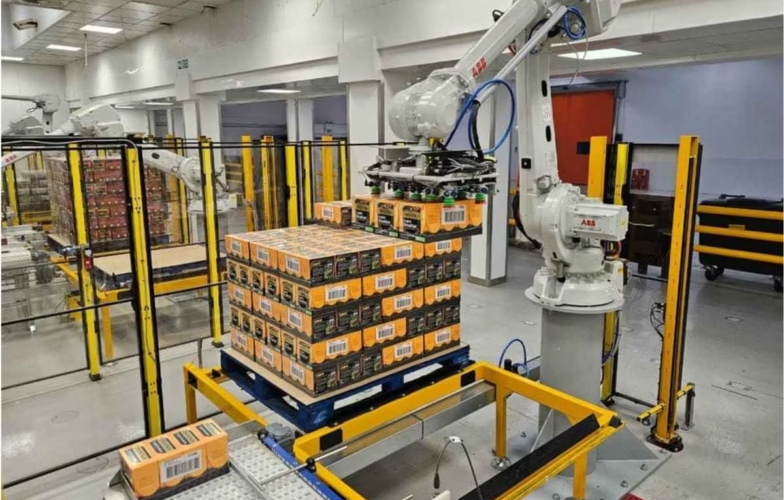
A pick and place robot is an automated system designed to move products from one location to another; for example, from a conveyor belt to a palletiser.
These robots have become extremely popular as they replace the need for repetitive manual tasks, and because they can either work independently or alongside other automated systems, they offer greater productivity and flexibility compared to traditional machinery.
What Products Can They Handle?
Pick and place robots can handle a wide range of products, including:
This makes them an extremely accessible option for many industries, particularly food and beverage, where pick and place robots can handle items such as baked goods and confectionery with care and precision.
Similarly, they are a useful addition to many manufacturing functions, and can be used in the following applications:
- Packaging
- Sorting
- Product orientation
- Assembly support
- Palletising preparation
- End-of-line handling
Now, let’s take a closer look at how pick and place machines work.
How Does a Pick & Place Machine Work?
Step 1: Product Identification
Pick and place robots identify products and their positions using a combination of tools, such as sensors, cameras, and conveyor-tracking systems, to ensure accuracy in the next step.
Step 2: Product Picking
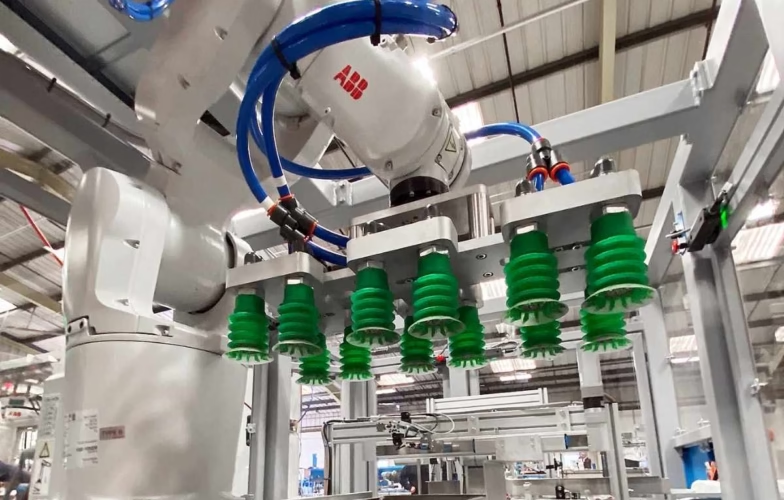
Depending on your product’s size and weight, your robot will either use vacuum grippers, mechanical grippers, or a custom end-of-arm tool, allowing your pick and place robot to offer accurate, repeatable precision every time.
Step 3: Product Movement
With minimal human intervention needed, pick and place robots ensure speed and accuracy while performing repetitive tasks; this also reduces the risk of product damage during product movement.
Step 4: Product Placement
Pick and place robots can do a lot more than just move products from one place to another. They can also assist with sorting, loading, and packing, and can seamlessly integrate into existing operations such as automated palletisers.
Step 5: Repeat Cycle
And the cycle repeats itself, allowing for continuous operation and consistent output, which results in a more efficient and productive production line.
Different Types of Pick & Place Robots
One of the many benefits of robotic systems is that they are all different, and that’s the same for pick and place robots. Depending on your product and operational needs, there are a variety of options available to suit.
Cartesian Robots
Cartesian robots are physically unique; built like a small crane, their movements are linear, e.g., up/down, left/right, forwards/backwards. As a result, it’s often used in simpler applications, but this also makes it a cost-effective option.
SCARA Robots
Selective Compliance Assembly Robot Arm (SCARA) robots can move quickly and freely on their axes, and this flexibility and small size make them suitable for assembly and sorting, as well as pick and place.
Delta Robots
Delta robots have large, sweeping arms and are typically mounted over the top of the production line. They operate at high speed and are best suited for lightweight products or food and packaging applications.
Articulated Robots
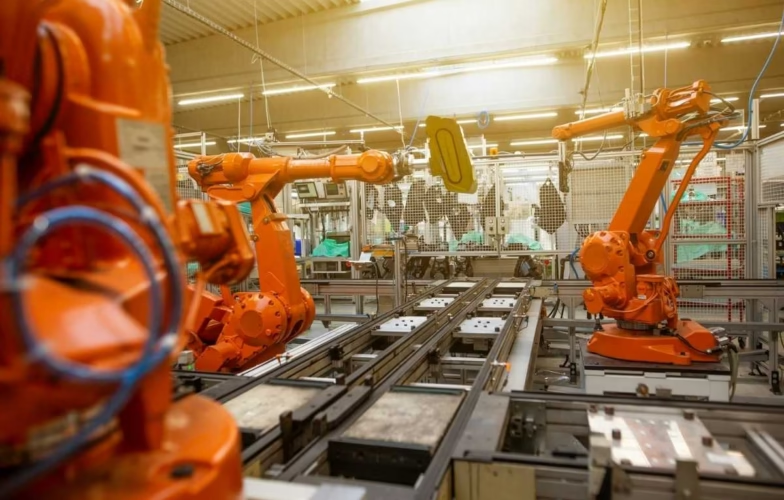
Articulated robots have multiple axes, making them the most flexible of this list. This provides a high level of versatility, making them the best option for complex production environments.
Do I Need Pick & Place Robots?
But the real question is: ‘Does your production line need a pick and place robot?’. Here’s our quick self-assessment checklist to help you decide. Do you:
✓ Struggle to recruit production staff?
✓ Have repetitive product handling tasks?
✓ Experience throughput bottlenecks?
✓ Need greater consistency?
✓ Have health and safety concerns?
✓ Want to increase output without expanding your workforce?
✓ Have plans to scale production?
Your next steps will depend on how many of the above questions you answered ‘yes’ to:
- If you answered yes to one or two questions, you will most likely benefit from a process review.
- If you answered yes to three to five questions, automation could deliver measurable productivity gains.
- If you answered yes to six or more questions, a pick and place solution is likely worth serious consideration.
How RMGroup Helps Implement Pick & Place Automation
If our checklist helped you to determine that your production line would benefit from a pick and place system, we can support you in designing and implementing the perfect robot for your business.
Whether you need a simple function or need full integration with an existing system, our team works with you to create a bespoke design as well as offer ongoing support and maintenance to ensure maximum efficiency.
Get in touch with us today to discover our bespoke robotic automation solutions.