Blog
What is Stretch Hooding: Benefits & Uses Explained
17 November 2026 · Back to the blog
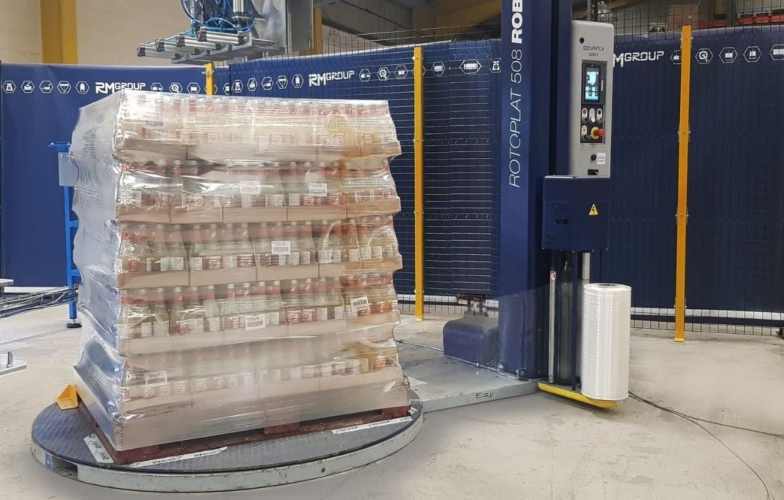
End-of-line packaging teams often face a challenge: protecting palletised loads during transit and storage without slowing the line. At RMGroup, we supply stretch hooding machines in partnership with Lachenmeier, an industry specialist.
Stretch hooding (also known as hood stretching) is an increasingly popular alternative to traditional shrink wrap and stretch wrap – the global market for stretch hood film systems was valued at $1.42 billion in 2025 and is projected to reach $2.46 billion by 2033.
In this guide, we’ll cover what stretch hooding is, how the process works step by step, its primary advantages over traditional packaging methods, and the industries where stretch hood wrapping is most widely used.
What is Stretch Hooding?
Stretch hooding is a pallet packaging method that uses polyethene film to secure and protect palletised goods. You may have heard this commonly referred to as hood stretching. This automated packaging solution cuts and seals the film to form a tailored hood.
A stretch hooding machine stretches the film horizontally and vertically, then lowers it over the entire palletised load, and then releases it. Because of the film’s natural elasticity and memory, it contracts tightly around the contours of the load and the pallet base without requiring any heat – unlike shrink wrap.
This process creates a secure protective layer that guards against weather, dust, and moisture while offering load stability during transit and outdoor storage.
How Does Stretch Hooding Work?
The stretch hooding process follows these key stages:
1. Measuring and Hood Formation
The stretch hooding process starts with measuring the dimensions of the palletised load. An automated stretch hooding machine unrolls polyethene film, measures the height required, cuts the film, and heat-seals the top edge to create a customised hood.
2. Radial and Vertical Film Stretching
A stretch hooding machine stretches the film before lowering it, stretching the film horizontally using mechanical arms. By stretching the material beyond the dimensions of the pallet load, the machine ensures vertical clearance as it applies the film.
3. Application Over the Load
The machine’s applicator frame moves downward, pulling the stretched hood over the top, sides and base of the palletised goods. This maintains consistent film tension across all corners and surfaces without the risk of tears or punctures.
4. Release and Elastic Memory Recovery
Once released, the elastic film recovers to its original shape, creating a tight and protective seal around the load while securing it firmly to the wooden or plastic pallet base.
Key Benefits of Stretch Hooding
Let’s look at the biggest advantages of incorporating stretch hooding into end-of-line packaging operations:
Load Stability: The stretched hood film holds the goods firmly onto the pallet base to prevent load shifting, tilting, or loose packaging during transport.
Weather & UV Protection: The film forms a seamless hood covering the top and four sides of the pallet, offering protection against rain, moisture, dirt and dust.
No Heat Required: Unlike shrink wrapping, stretch hooding relies entirely on the elasticity and memory of polyethene film. This eliminates the need for heat, reduces energy consumption, lowers operational costs, and minimises risk.
Visual Inspection: The single-layer transparent stretch hood film enables accurate barcode scanning and quick visual quality checks without removing the packaging.
Compatibility with Irregular Loads: Automated stretch hooding machines can stretch film dynamically to accommodate varying pallet dimensions, protruding edges and non-standard load shapes.
High Throughput & Speed: Modern stretch hood machines can wrap hundreds of pallets per hour, streamlining the end-of-line packaging process.
Stretch Hood Pallet Wrapping vs Other Methods
Shrink wrap relies on heat to shrink the film, and standard stretch wrap depends on manual or mechanical tension. Stretch hood pallet wrapping combines speed, protection and energy efficiency in one process. Here’s how the three compare:
| Factor | Stretch Hooding | Shrink Wrap | Standard Stretch Wrap |
| Heat required | No – film is stretched and released mechanically | Yes – heat tunnel shrinks film around the load | No – film is stretched and wrapped around the load |
| Coverage | Full 360° + top coverage in one motion | Full coverage, including top | Side coverage only (top usually needs a separate cap/sheet) |
| Load stability | Excellent – even pressure distribution suits irregular or unstable loads | Good, but can vary with heat distribution | Good for uniform loads; less effective on irregular shapes |
| Weather/UV protection | Strong – continuous film barrier | Strong, similar barrier once shrunk | Moderate – more prone to gaps or loosening over time |
| Application speed | Fast – well suited to high-volume, automated lines | Moderate – heating cycle adds time | Fast, but multiple wrap passes needed for full stability |
| Energy use/cost | Lower – no heating element required | Higher – energy cost of heat tunnels | Lower energy use, but higher film consumption for stability |
| Best suited for | High-throughput lines, irregular or mixed loads, weather-sensitive goods | Loads needing a tight, heat-sealed finish | Simpler, lower-volume operations with regular pallet shapes |
Common Uses & Industries for Stretch Hooding
Stretch hooding is widely used across industries that require stability during transit and storage. Common applications include building materials, chemicals and minerals, animal feed, plastic polymers, timber, and beverages.
Any business palletising products that need to withstand outdoor storage or long-distance transport can benefit from stretch hood wrapping’s protection and load security.
Choosing the Right Stretch Hooding Machine for Your Business
Selecting the right stretch hooding system requires evaluating your current operational demands and your long-term production goals. Consider factors like throughput requirements, pallet sizes, film type, and integration with existing lines.
Because every production environment presents unique challenges, a standard off-the-shelf system might not deliver maximum efficiency.
Our team of experts work with you to specify, design, and integrate a bespoke stretch hooding solution tailored to your facility and packaging demands. Contact us today to discuss your requirements in more detail.