Blog
Why Automation is No Longer Optional for UK Manufacturers
17 August 2026 · Back to the blog
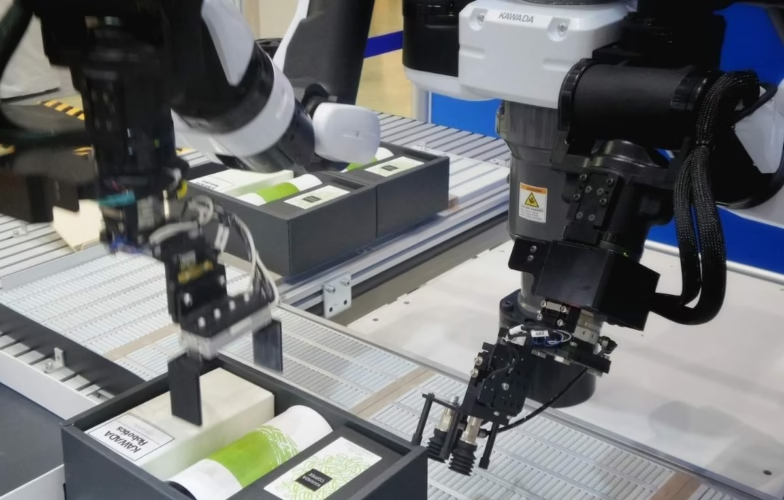
The UK has long been recognised as a global leader in innovation. Our universities produce world-class research, our engineers are highly respected, and we remain one of the world’s largest economies. Yet when it comes to actually adopting automation on the factory floor, the UK is falling behind.
A recent industry report highlights a stark reality: UK manufacturers have just 112 industrial robots per 10,000 workers. That’s roughly half the EU average, and far behind global leaders like South Korea, Germany, and Singapore.
For small and medium-sized manufacturers, who are the backbone of the UK industrial economy, this gap has serious implications.
Automation isn’t simply about modernising factories. It’s about productivity, competitiveness, and survival in a rapidly digitising global market. At RMGroup, we see this challenge every day when we speak with manufacturers across the UK. The good news is that automation works and global evidence proves it.
The key question for UK businesses is no longer if automation is required, but how quickly it can be implemented effectively.
The UK’s Automation Gap
The UK manufacturing sector delivers significant economic value and accounts for a substantial share of national R&D investment.
However, while the UK excels at generating innovation, it has historically struggled to translate that innovation into scalable, real-world manufacturing capability. The consequence is a growing competitiveness gap. Over the past two decades:
- The UK’s share of global manufacturing output has declined
- Its position in industrial competitiveness rankings has weakened
- Digital adoption across the sector has remained inconsistent and fragmented
Meanwhile, countries such as Germany, South Korea and the United States have taken decisive action to accelerate automation in the manufacturing process. The difference is clear: the adoption of automation directly drives productivity, efficiency and profitability.
Nowhere is this more important than within SMEs, which make up the majority of UK manufacturers.
Automation Is a Proven Engine for Industrial Performance
Automation has consistently demonstrated its value as a key driver of industrial performance across global markets. In highly competitive sectors, the ability to increase output while maintaining precision and consistency is fundamental to long-term success.
Countries such as Singapore and Switzerland provide clear evidence of how strategic investment in automation can transform industrial capability. Rather than relying on low labour costs, these economies have prioritised:
- Advanced manufacturing
- Precision engineering
- High-value production
This approach enables them to compete on quality, innovation, and reliability rather than volume alone. For smaller economies with limited labour pools, automation in manufacturing enables them to sustain global leadership by focusing on expertise, innovation, and technological excellence.
The Risk of Standing Still
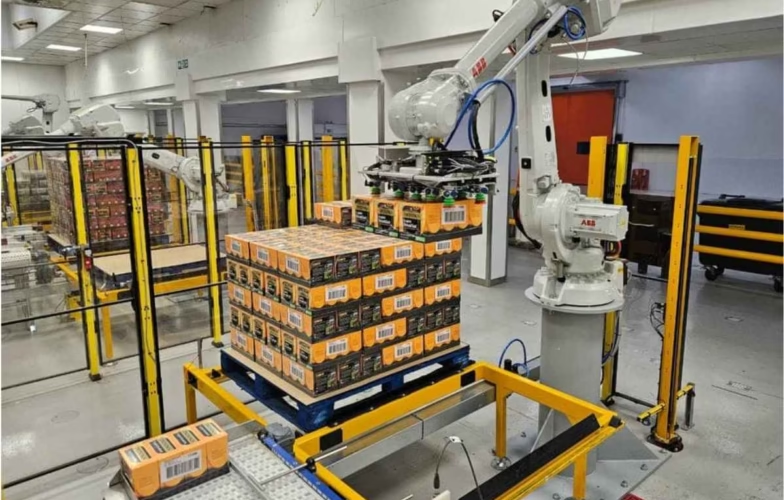
While many UK manufacturers recognise the importance of digital transformation, a significant gap remains between investment and full implementation. Current data indicates that approximately 70% of manufacturers are investing in digital tools, yet only around 10% have achieved fully digital factory operations.
This highlights an issue: many organisations are caught in a transitional phase, where progress has begun but has not yet delivered real outcomes.
Being stuck in this “middle ground” presents some risks. Partial implementation often results in fragmented systems that don’t communicate effectively, limiting the potential benefits of manufacturing automation solutions and digitalisation. To move beyond this stage, manufacturers must adopt a holistic approach that aligns technology adoption with business objectives.
This is where a capable automation partner becomes important. With the right expertise and guidance, organisations can move from isolated pilots to fully integrated, high-performing digital operations that deliver measurable returns.
Why Choosing the Right Automation Partner Matters
Automation is often misunderstood as a straightforward process of installing robots or upgrading equipment. In reality, successful automation is a complex, multi-layered transformation that requires careful planning:
- Strategic process: Analysis of existing processes to identify inefficiencies, bottlenecks and opportunities for optimisation.
- System integration: Modern manufacturing environments rely on interconnected systems such as machinery and enterprise software. Ensuring these systems communicate seamlessly is essential for achieving the full benefits of automation.
- Workforce training: Employees must have the knowledge and confidence to operate in a more technologically advanced environment.
- Long-term operational support: Automation requires continuous monitoring, optimisation and maintenance. An experienced partner provides the support needed to keep systems efficient and reliable.
When automation is poorly implemented, it can introduce more disruption than benefit, such as downtime, inefficiencies and increased costs. This is why selecting the right partner is essential. An experienced automation partner brings proven integration expertise, industry knowledge, and a structured approach to delivery.
Why Manufacturers Trust RMGroup
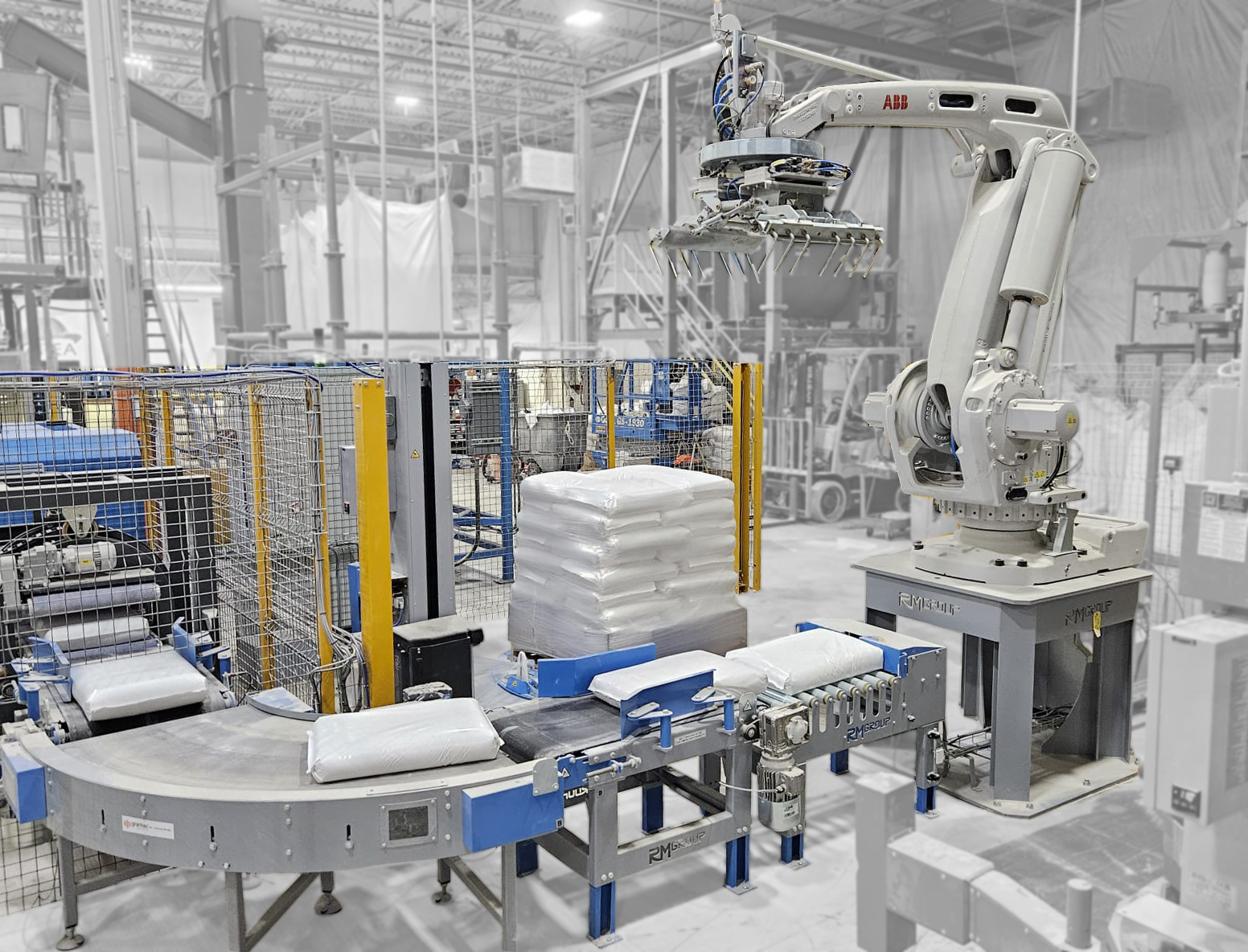
At RMGroup, our role is to remove the risk from automation adoption. We work closely with manufacturers to ensure that automation delivers real, measurable business outcomes. Our approach focuses on:
Practical Automation Strategy
We start by understanding your production processes and identifying the highest impact opportunities for automation.
Scalable Solutions
Our systems are designed to grow with your business, whether you’re automating a single process or transforming an entire production line.
Seamless Integration
Automation must work with your existing systems, workforce and workflows.
Proven Implementation
With years of experience delivering automation projects across the UK industry, we understand the realities of manufacturing environments. Our goal is to make automation deliver real value for your business.
Automation Is the Future of UK Manufacturing
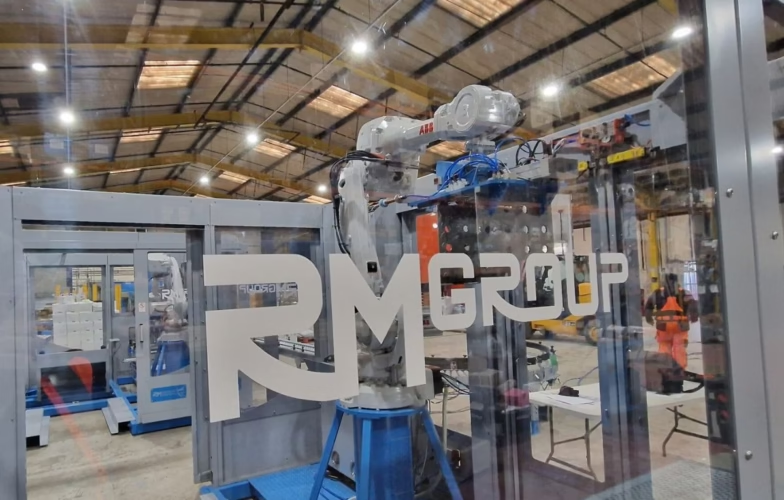
The UK has the engineering talent, research capabilities and entrepreneurial businesses to compete globally. However, closing the productivity gap with our international peers requires the widespread adoption of automation in the manufacturing industry.
The opportunity is enormous. Industry estimates suggest that closing the digitalisation gap could add around £150 billion to UK GDP by 2035.
For individual manufacturers, the benefits are clear and measurable:
- Increased productivity through optimised processes and reduced manual intervention
- Enhanced product quality driven by consistency and precision
- Greater operational resilience in the face of supply chain and labour challenges
- Improved competitiveness in both domestic and global markets
Automation Isn’t About Replacing People
It’s about enabling businesses to maximise the value of the talent they already have.
We believe automation should be accessible and commercially effective, regardless of the size or complexity of your operation. Whether you are exploring initial opportunities or scaling existing capabilities, we support manufacturers in moving from concept to successful implementation.
The future of manufacturing is increasingly automated, and the organisations investing today will define tomorrow’s industry.
Get in touch to discuss how we can support your automation strategy.