Blog
How Long Does It Take to Install a Robotic Palletiser?
19 August 2026 · Back to the blog
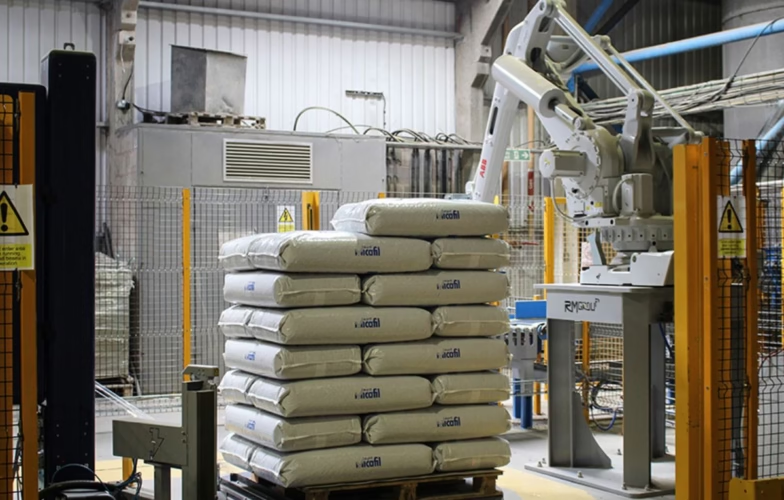
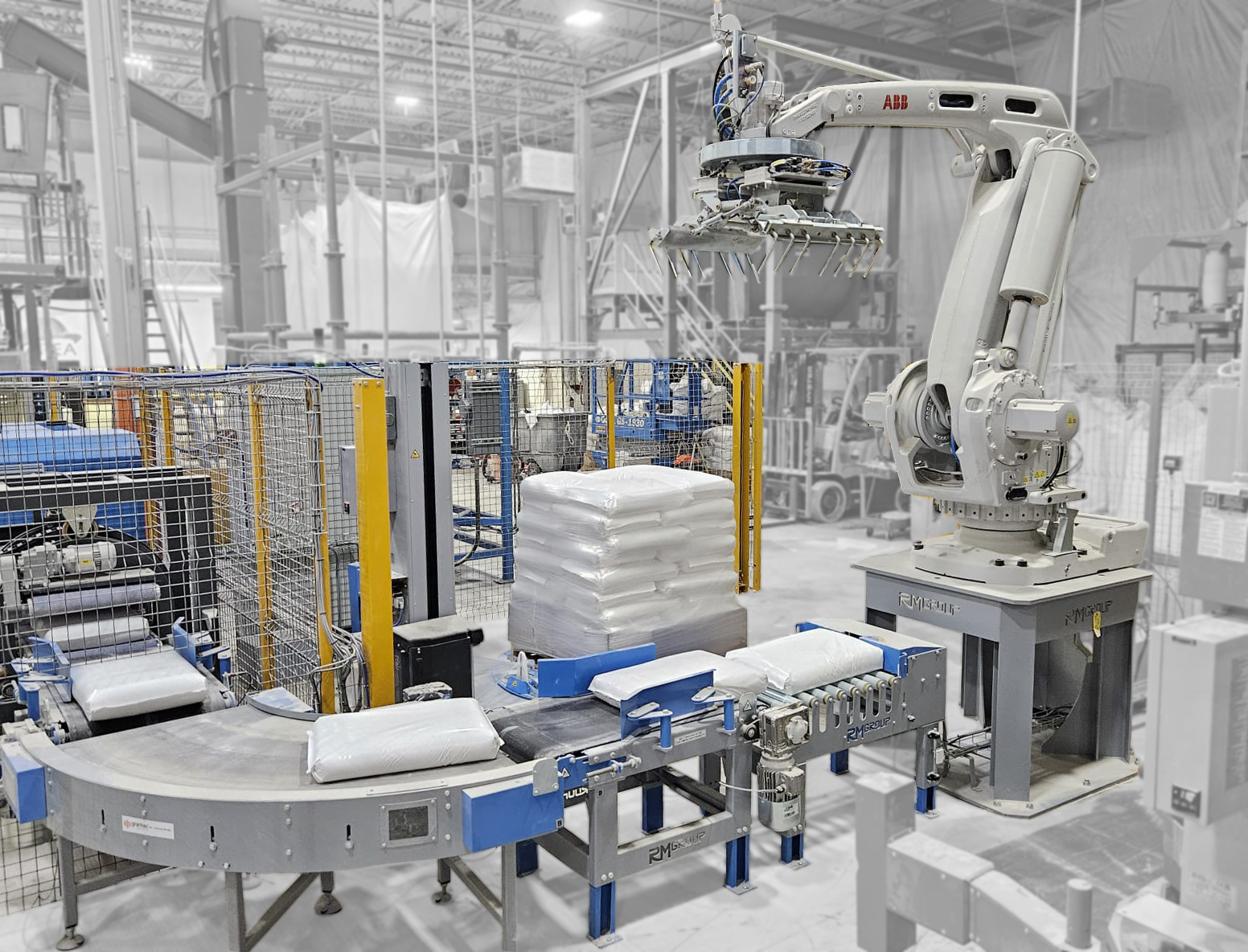
A standard, pre-engineered robotic palletising cell can often be installed, commissioned and handed over in about one working week. Bespoke and fully integrated systems can require several weeks. The overall project programme is longer because design, manufacturing, software development, and factory acceptance testing occur before delivery.
Most manufacturers considering palletising robots ask two questions: when will the complete system be ready, and how long will production be disrupted on site? Those timelines are connected, but they are not the same.
Here at RM Group, we ensure that as much assembly, integration, and testing as is practical is completed before the equipment reaches the customer. This reduces uncertainty during installation and helps keep the final production changeover controlled and predictable.
Typical on-site installation times
The following ranges are a useful starting point for planning a palletising robot installation. Every project is assessed individually, and the confirmed programme will depend on the agreed scope, site conditions and level of integration required.
| System type | Typical on-site window | What usually drives the programme |
|---|---|---|
| Standard single-line robotic palletising cell | Approximately 4-8 working days | Cell positioning, guarding, services, connection to the production line, product trials, safety validation and operator training. |
| Bespoke multi-line or multi-pallet system | Approximately 1-3 weeks | Multiple infeeds or pallet stations, more complex product routing, specialist tooling, pallet handling and additional controls integration. |
| Fully integrated end-of-line automation system | Approximately 2-5+ weeks | Integration with case packing, conveying, labelling, inspection, pallet dispensing, wrapping, warehouse systems or mobile robot movements. |
Installation time is not the same as total project lead time
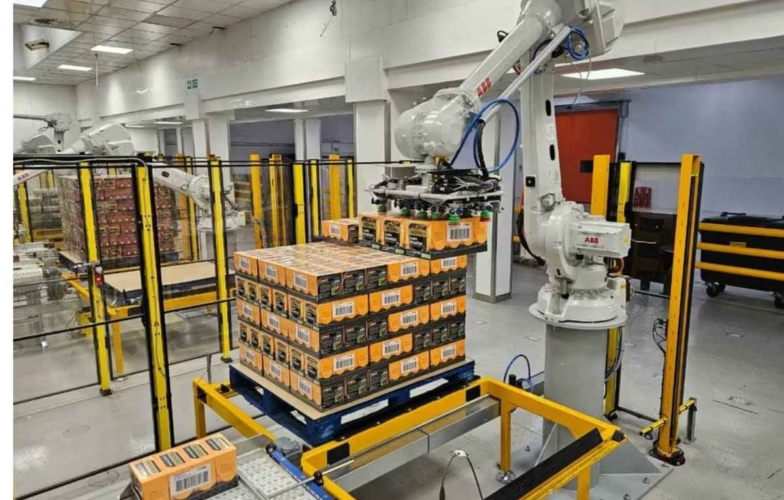
The visible work on the customer’s site is the final part of a much larger engineering process. A reliable robotic palletising project starts with understanding the products, pallet patterns, throughput, available space, upstream and downstream equipment, site services and operational priorities.
A standardised system using proven modules can normally move through this process more quickly than a fully bespoke line. Where a project includes new product-handling concepts, specialist end-of-arm tooling, or interfaces with several third-party machines, more engineering and testing time will be required before delivery.
What can extend the installation programme?
Number of product and pallet formats
A system handling a single consistent case or bag is normally quicker to prove than an application with many SKUs, pallet sizes, and stacking patterns. Each agreed format must be tested to confirm reliable handling and a stable finished load.
End-of-arm tooling
Vacuum, mechanical, fork, clamp or multi-purpose tooling must suit the product and required cycle rate. Tooling that handles several products, picks complete rows, places interlayers or manages empty pallets will require additional setup and testing.
Conveyors and pallet handling
The quantity and length of product conveyors, transfer points, pallet dispensers, and full-pallet take-away systems can significantly affect installation time. Alignment, guarding and product flow all need to be checked under production conditions.
Additional end-of-line equipment
Pallet wrapping, labelling, checkweighing, metal detection, case handling and print-and-apply systems introduce further interfaces. A single integrated controls philosophy helps, but every item must still be commissioned as part of the complete process.
Controls, data and mobile robot integration
Links to existing PLCs, production databases, warehouse systems or AMR fleets require clearly defined signals, responsibilities and test scenarios. Network availability, cybersecurity requirements and access to third-party support can also affect the sequence.
Site access and readiness
Restricted doorways, lifting constraints, floor condition, service locations or incomplete enabling works can delay progress. Confirming these details at survey stage is one of the most effective ways to protect the installation programme.
Available production window
Some work can be completed alongside normal operations, but final tie-ins, live testing and site acceptance testing may require a controlled shutdown. A clear, jointly agreed changeover plan helps balance installation progress with production demand.
Frequently asked questions
How long does a standard palletising robot take to install?
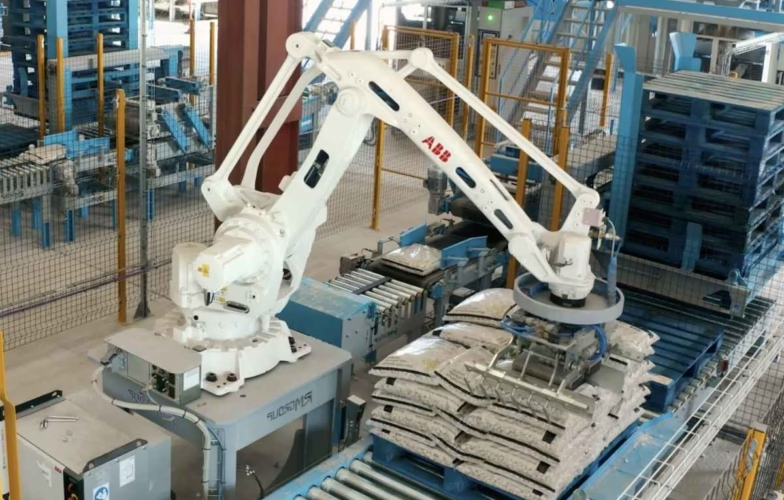
As an initial planning allowance, a standard single-line cell may require around four to eight working days on-site for installation, commissioning, safety checks, and training. The confirmed duration will be based on the final scope and site survey.
Will production need to stop for the whole installation?
Not necessarily. Cell positioning, assembly and some electrical work may be completed in a segregated area while production continues. Final conveyor tie-ins, interface testing and live trials are more likely to require an agreed shutdown or controlled production window.
What is the difference between FAT and SAT?
The Factory Acceptance Test is carried out before despatch to demonstrate compliance with the agreed specification. The Site Acceptance Test takes place after installation and commissioning, using the system in its final operating environment.
How can we help keep the installation on schedule?
Complete enabling works on time, confirm access and utilities, provide representative products and pallets, make the right production and maintenance personnel available, and secure third-party support for any existing equipment that must interface with the new system.
When can the palletiser start commercial production?
The system can enter routine production once commissioning, safety validation, operator training and the agreed acceptance activities have been completed. We’ll define these milestones in the project programme so responsibilities and readiness are clear.
Start planning your installation window
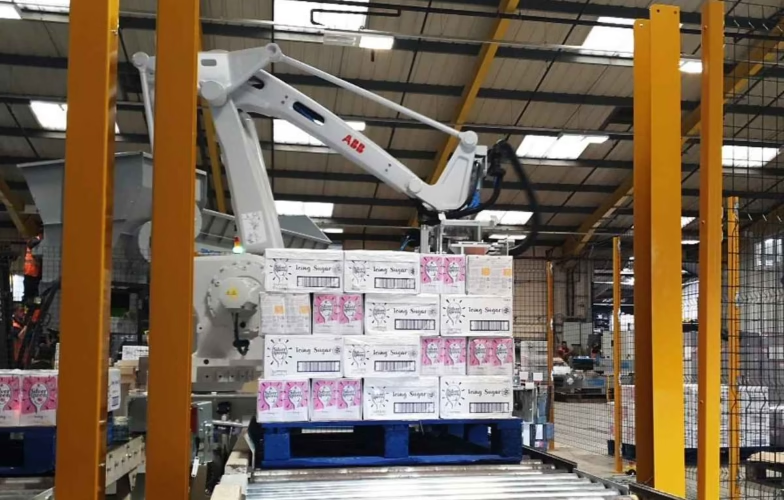
A robotic palletiser installation can range from several days for a standard cell to several weeks for a fully integrated end-of-line system. The most reliable schedule is created by defining the scope early, thoroughly testing before despatch, and preparing the site before the installation team arrives.
We design, manufacture, integrate and support palletising robots for bags, boxes, trays, crates, tubs, drums and other packaged products. From a proven single-cell solution to a bespoke multi-line installation, our team can develop a system and project plan around your production requirements.
Get a project timeline for your site by contacting us on 01686616875 or by emailing sales@rmgroupuk.com.