Blog
End-of-Line Packaging Automation: What’s Involved
17 April 2026 · Back to the blog
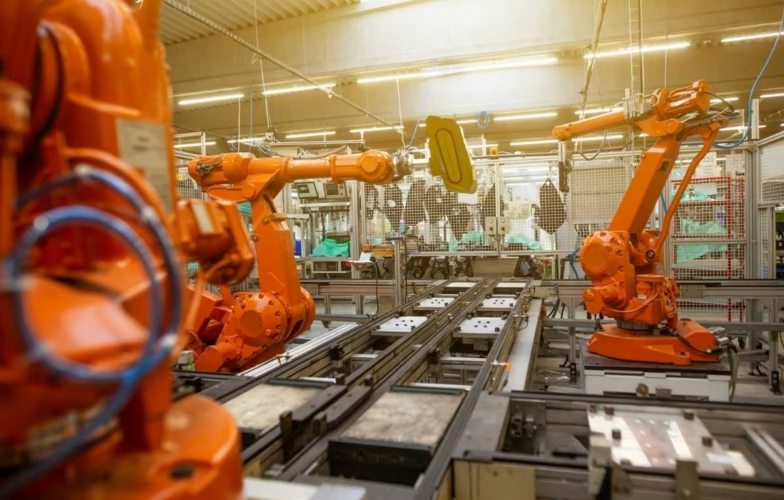
Automation is now an essential part of production lines, with over 3.5 million robots in use across the world. These automated systems are transforming production lines by increasing efficiency and improving consistency while reducing manual labour.
Therefore, a fully automated end-of-line packaging solution would not only be useful but also incredibly valuable, ensuring every step from raw product to palletised output is optimised.
However, the UK is falling behind when it comes to robotic automations, with there only being 111 robots per 10,000 manufacturing workers.
In this article, our experts will explain step-by-step what an end-of-line packaging automation is, including the benefits and customisation options, and how to choose the right partner for your business’s needs.
- What Is End-of-Line Packaging Automation?
- The 5 Key Components of an Automated Packaging Line
- Integration: How Everything Works Together
- Benefits of End-of-Line Packaging Automation
- What Is End-of-Line Packaging Automation?
- Customisation: No Two Lines Are the Same
- Challenges & Considerations
- Choosing the Right Automation Partner
What Is End-of-Line Packaging Automation?
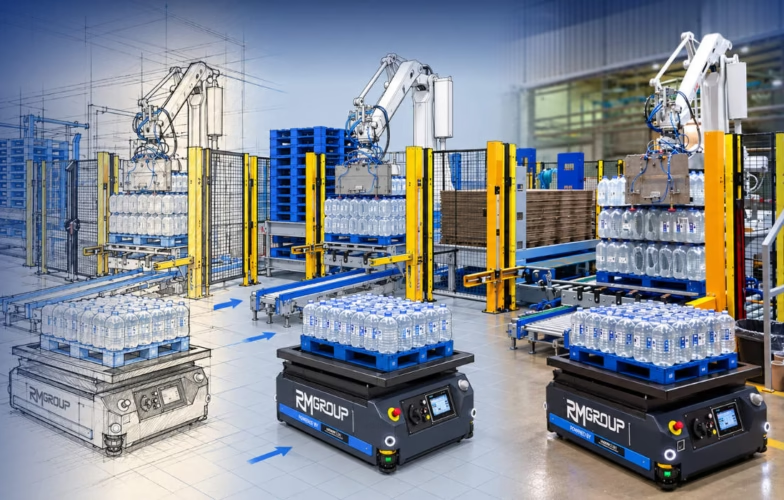
So, what exactly is end-of-line packaging automation? It’s when robotic systems are integrated into the production line to automate processes with low to no manual intervention. This includes:
- Product handling
- Weighing and filling
- Bagging and wrapping
- Sealing and labelling
- Palletising
End-of-line automation solutions ensure the production line is fully connected into one seamless system, providing improved accuracy and effectiveness.
The 5 Key Components of an Automated Packaging Line
1. Product Infeed & Handling
Systems such as conveyors, hoppers, or feeders help to make sure there’s a consistent product flow so the production line runs smoothly without unnecessary delays.
2. Weighing & Filling Systems
Depending on the product, weighing and filling systems will vary by product; however, they should always consider the line’s speed to ensure accuracy.
3. Packaging Machines
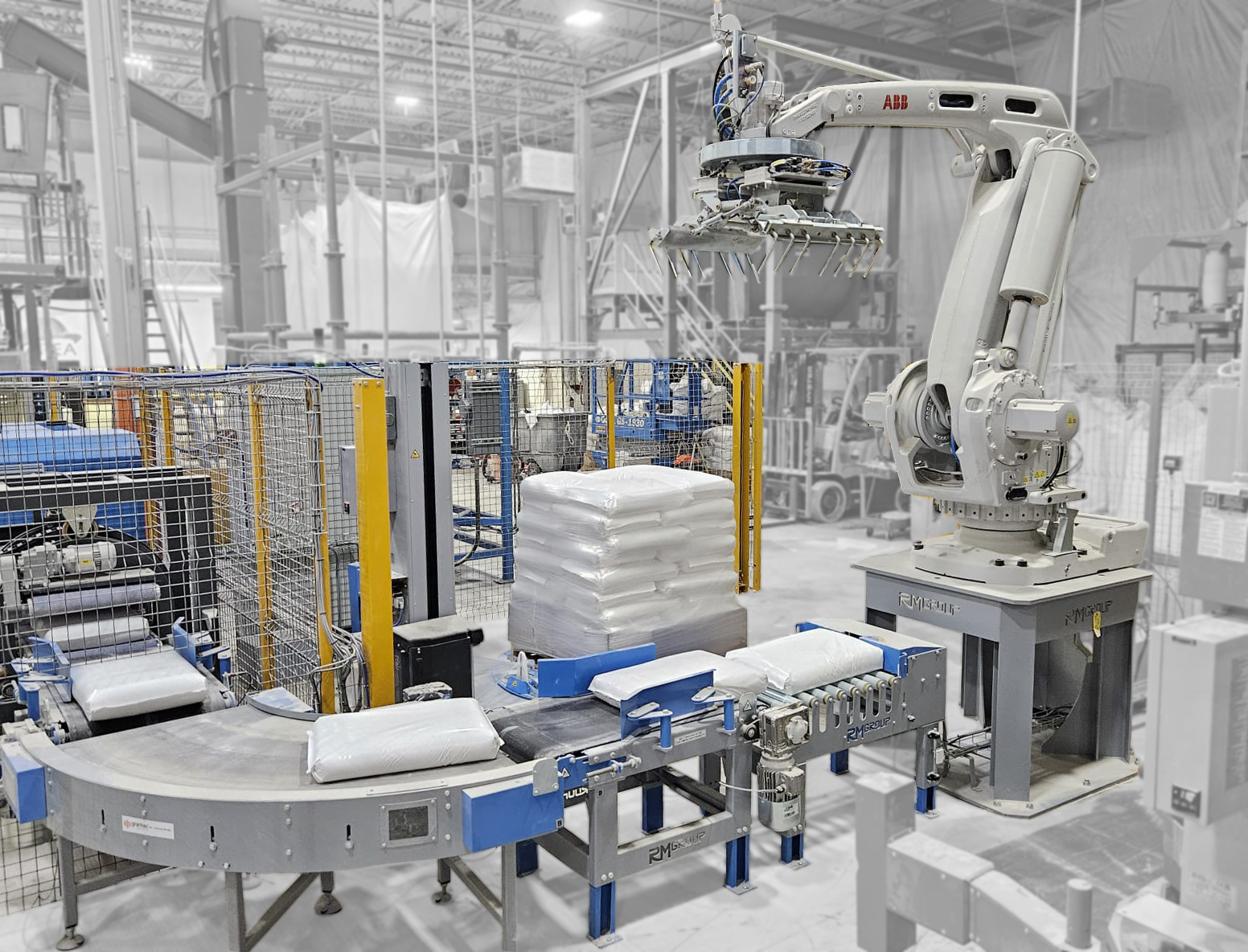
From bagging machines, such as bulk bagging systems, to wrapping machines, such as pallet wrapping systems, automations can be configured to suit the product and its packaging requirements.
4. Sealing & Labelling
Packaging is then securely sealed using either heat sealing, stitching, or adhesive methods, and then labels are printed and applied with a dedicated automation system.
5. Palletising & End-of-Line Automation
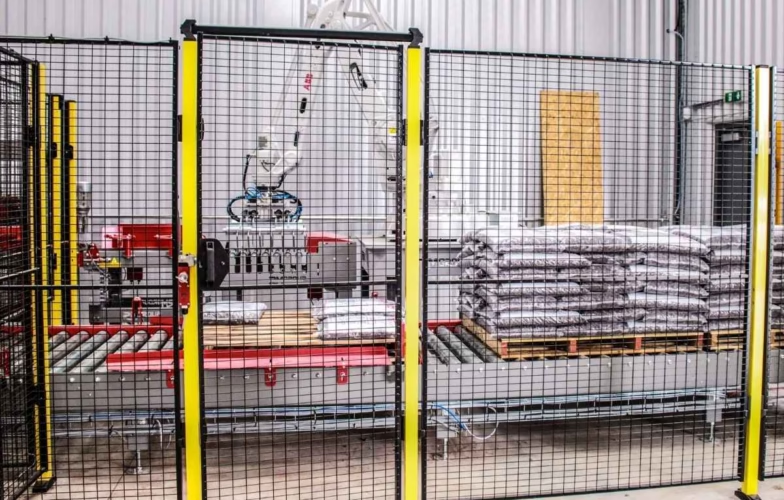
Unlike conventional palletisers, robotic palletisers will automatically stabilise the load and use systems such as stretch hooding to fix the packaged products to the pallet.
Integration: How Everything Works Together
Central control systems are used to operate each part of the production line while also ensuring they are all synchronised with the others for maximum efficiency, acting as a communication line between the machines.
While each system doesn’t need to be supplied by the same vendor, it’s highly recommended that the same supplier is used for each component. This helps to ensure that the systems work well together and can communicate effectively.
Benefits of End-of-Line Packaging Automation
Automating your production line has many benefits; one of the most well-known is that it aids in boosting production line and employee productivity. Other benefits include:
- Reduced Labour Costs: With machines automating repetitive tasks, labour costs decrease while allowing employees to focus on manual parts of the production process.
- Improved Accuracy & Reduced Waste: Removing the risk for human error, automated systems decrease the amount of waste produced by improving accuracy, which also helps reduce costs.
- Better Traceability & Data Insights: Manually tracking and reporting on data can lead to inaccurate data due to human error. With an automated line, the machines can easily record, store, and report for better insights.
- Enhanced Safety: Some production line tasks can cause injury when not carried out safely. Automated end-of-line packaging systems remove this risk, prioritising employees’ safety.
Industries That Benefit Most
A wide variety of industries and sectors will benefit from automated end-of-line packaging solutions. However, RMGroup have seen first-hand the following industries benefit the most:
- Food, beverage and fresh produce
- Animal feed and pet products
- Chemicals, minerals and fertiliser
- Aggregates and building products
- Logistics and warehousing
- Ecommerce and retail
- Manufacturing and production
- Pharmaceutical
To find out more about the industries we’ve served over the last 30 years, get in touch with the team for a consultation.
Customisation: No Two Lines Are the Same
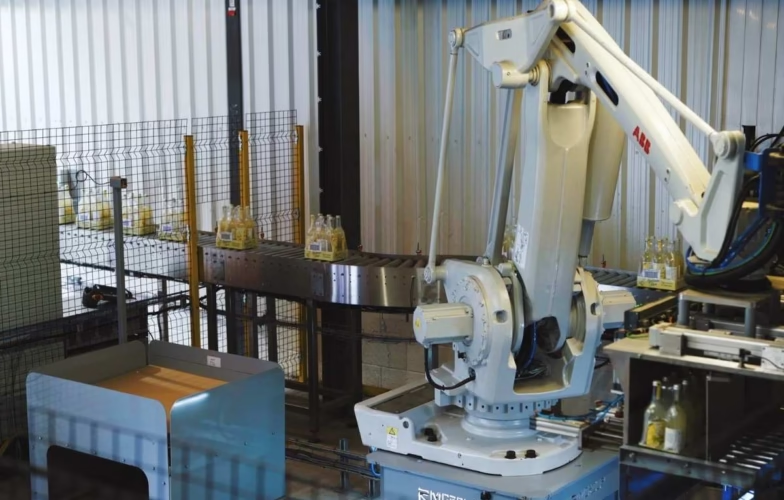
It’s a common misconception that automated end-of-line packaging systems only work for specific industries or products. But as we can see, product lines can be fully customised based on your business’s needs.
For example, solutions can be tailored based on three key elements:
- Product types
- Throughput requirements
- Space constraints
This is where the importance of the consultation and the design phase becomes clear; without this, your solution may not be configured correctly or may not provide the best results possible.
Challenges & Considerations
To help you decide whether an automated packaging line solution is right for your business, here are some key considerations:
- Cost: The initial investment cost for an automated solution is higher than that of manual systems. However, in the long-term, these machines save time and money.
- Integration: Again, a consultation is important to help determine the ease of system integrations and to find the best method for existing capabilities.
- Maintenance & Training: With regular maintenance, automatic systems will keep operating for many years. But keep in mind that employees will need to be trained and refreshed on how to use the machines.
- Scalability: Despite the initial cost, automated production lines can grow with your business, making them a valuable investment.
Choosing the Right Automation Partner
An experienced automation partner will not only have in-depth industry knowledge, but they’ll also be able to deliver full, bespoke end-of-line solutions that meet your requirements for growth and efficiency.
At RMGroup, we can design and deliver a tailored end-of-line packaging solution. Whether you’re upgrading an existing system or investing in full automation, our team can support you at every stage.
To learn more, get in touch with us today to find out how we can support your specific automation needs.