Blog
What Is Automated Palletising & Is It Right for Your Production Line?
13 March 2026 · Back to the blog
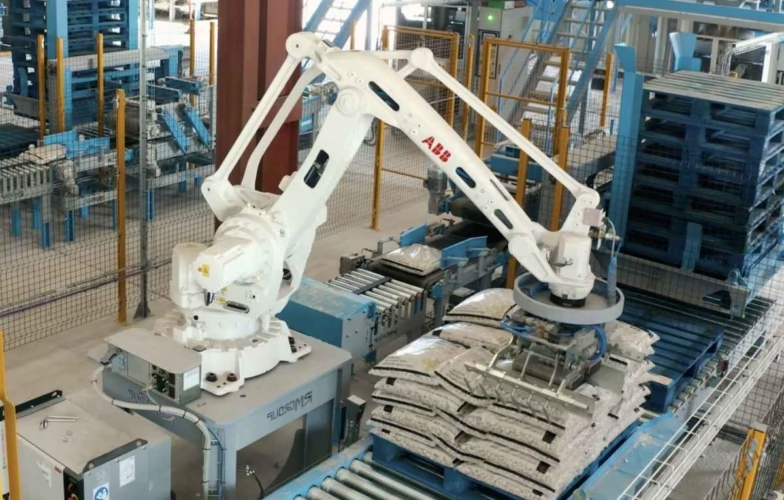
Growing production demand across several industries is driving the need for smart automation, helping to boost productivity and increase revenue per worker. However, the most important step of the production line is often forgotten during automation adoption: end-of-line packaging. And that’s where automated palletising comes in.
This final stage plays a crucial role in ensuring that your production line runs efficiently and safely, and with the capacity to scale as demand grows. But how do you know if automated palletising is right for your production line?
In this blog, our experts will guide you through what an automated palletiser is, including types, benefits, and how it works, so you can decide if this automation is right for you.
- What Is Palletising?
- What Is an Automated Palletiser?
- 5 Benefits of Automated Palletising
- Is Automated Palletising Right for Your Production Line?
- How RMGroup Can Help
What Is Palletising?
Let’s start by defining traditional palletising. This end-of-line process involves workers manually grouping, stacking, and securing items such as boxes, bags, or bottles onto a pallet to create a single, stable unit for transport and distribution.
Palletising is used across many industries, including:
- Food and beverage
- Logistics and warehousing
- Ecommerce and retail
- Pharmaceutical and technology
- Manufacturing and production
What Is an Automated Palletiser?
Automated palletising differs from traditional palletising as robotic systems or automated machinery will complete the entire end-of-line packaging process with minimal human intervention.
How Automated Palletising Works
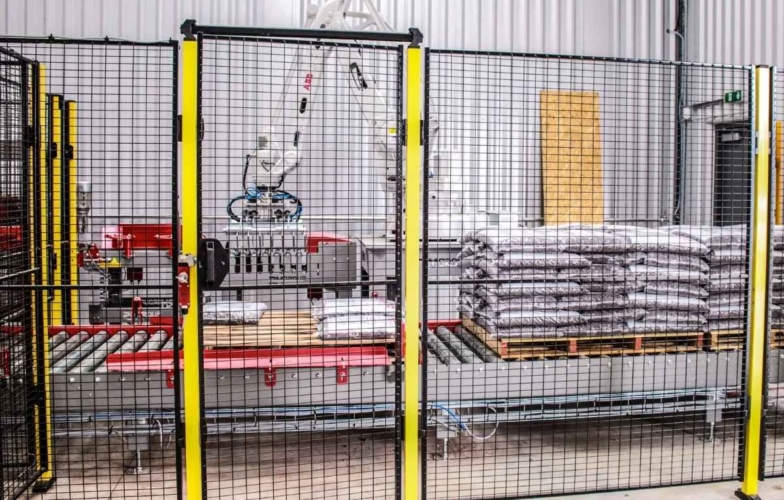
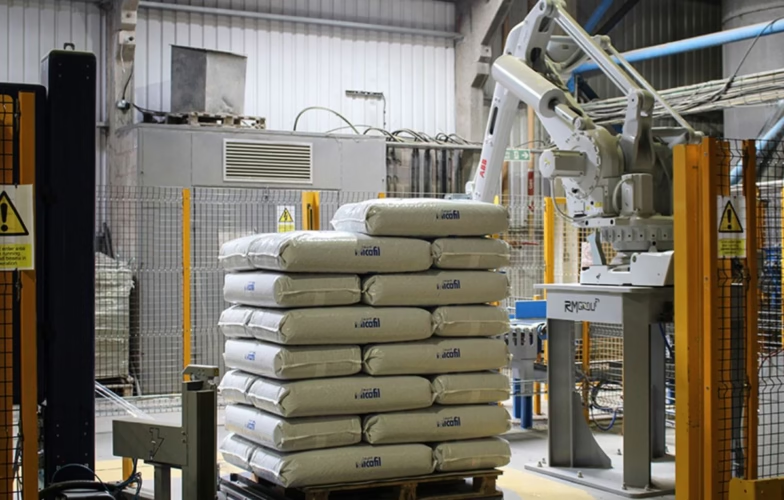
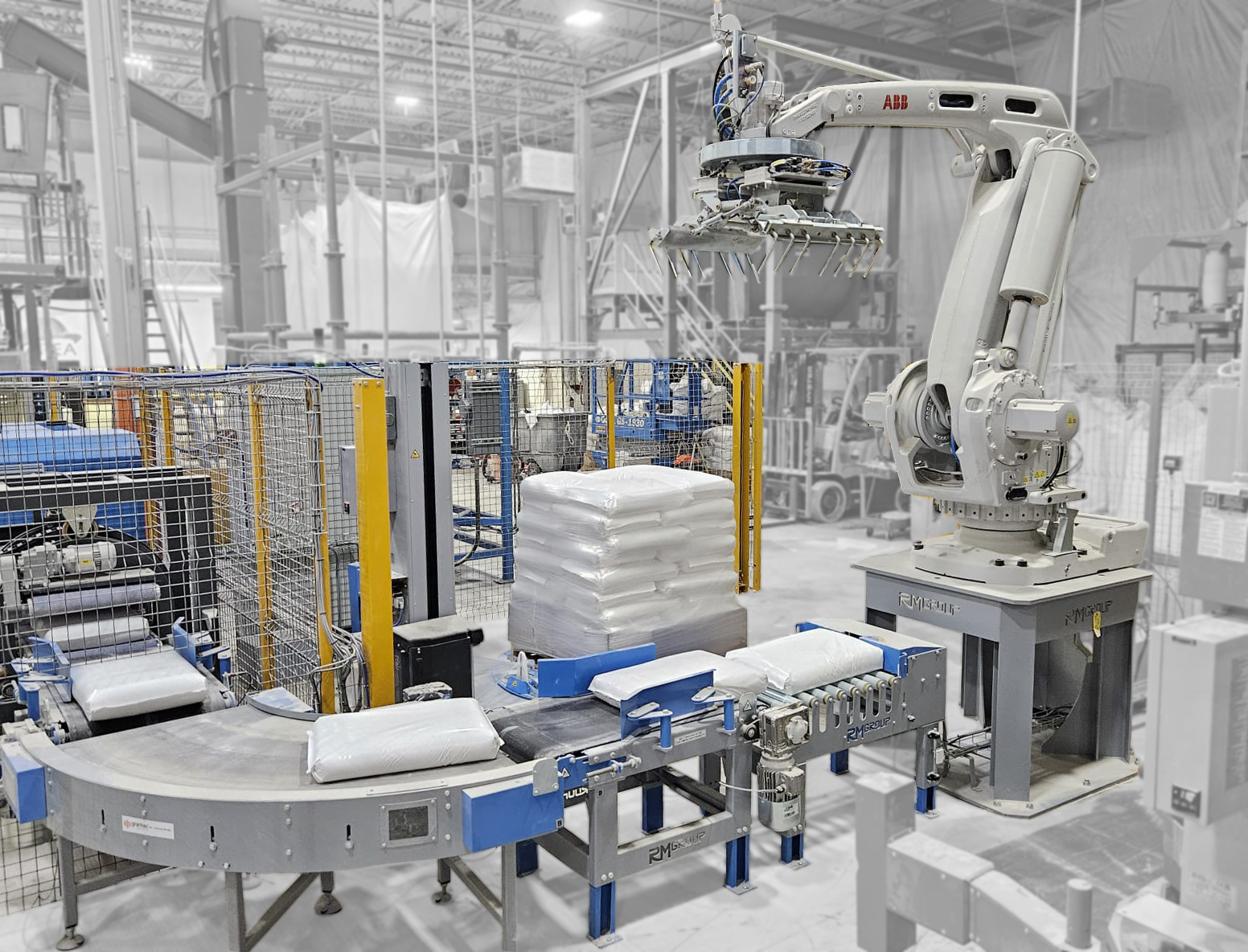
Automated palletisers use robotics and automation technologies such as robotic arms, conveyors, sensors, and programmable logic controllers to stack and secure items onto the pallet.
They can handle a wide variety of packaging types, and the pallet patterns can be easily changed via the user-friendly software, helping to create consistent pallet stacks and reduce errors.
Here’s a step-by-step run-through of the process.
- Products move along a conveyor
- Sensors identify product orientation
- A robotic arm or machinery picks up the items
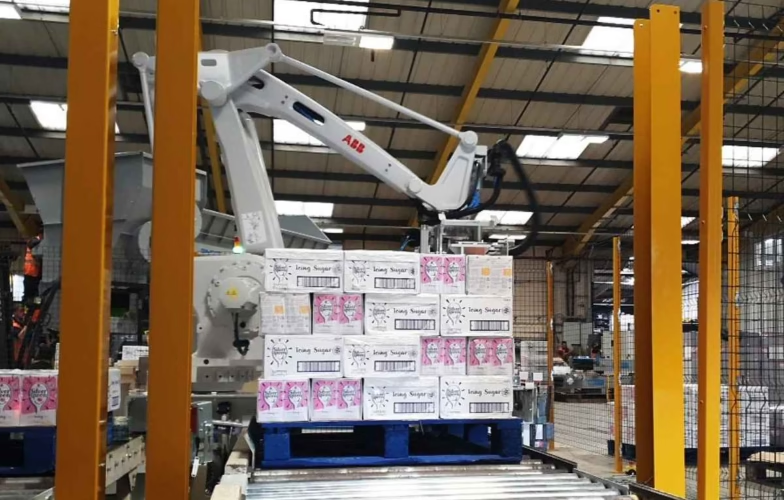
- Items are placed into a programmed stacking pattern
- The completed pallet is wrapped and moved to dispatch
Types of Automated Palletisers
Depending on your production line needs, full-scale robotic palletising systems can be installed, or customised solutions can be integrated into existing production line automations, including:
Robotic Pick & Place: Where robotic arms lift items from one location to another, offering high-speed automation and consistent quality. Flexpicker and delta robots can also provide a similar result.
Pallet Wrapping Systems: Automated machinery stabilises and protects your palletised goods with a stretch wrapping system, so your items are always secure before shipment.
Combined Case Filling and Palletising: Bespoke robotic systems both fill cases and palletise your products to create an efficient production line with a single automation.
5 Benefits of Automated Palletising
1. Increased Productivity
Automated systems operate continuously without the need for breaks, which reduces avoidable bottlenecks and increases productivity and turnaround times as a direct result.
2. Reduced Labour Costs
Although automated palletisers may have a higher upfront cost than traditional systems, less manual handling is required from workers, helping to reduce labour costs and balance out the initial investment.
3. Improved Workplace Safety
End-of-line production can cause repetitive lifting injuries, among other safety concerns. Automated palletisers aid in improving worker safety by carrying out strenuous tasks, allowing them to focus on ensuring a high-quality production line.
4. Consistent Pallet Quality
With programmable software that can be tailored to a variety of packaging types and production lines, automated palletisers make sure pallet stacking is accurate and precise to prevent damage to the products.
5. Better Data Tracking & Production Insights
Automated palletisers provide valuable production data by feeding directly into Warehouse Management Systems (WMS) and Material Requirements Planning (MRP) models. As a result, they can supply metrics such as pallet counts, system performance, and downtime events, allowing manufacturers to plan and analyse to drive efficiency.
Is Automated Palletising Right for Your Production Line?
As we can see, the benefits of automated palletising make the investment incredibly worthwhile. But even so, is it the right choice for your production line?
Below are some common situations where introducing automated palletising can significantly improve your production line performance:
- High-volume operations that require consistent, reliable pallet stacking
- Labour shortages or difficulties recruiting staff for manual palletising roles
- Production lines handling multiple stock keeping units (SKUs) that need flexible palletising solutions
- Limited floor space, where compact palletising systems may be more suitable
- Palletising processes that are slowing down overall production throughput
- Teams spending significant time manually stacking pallets, reducing efficiency elsewhere on the line
- Growing demand that requires higher production output
- Workplace injuries or safety concerns related to manual handling
How RMGroup Can Help
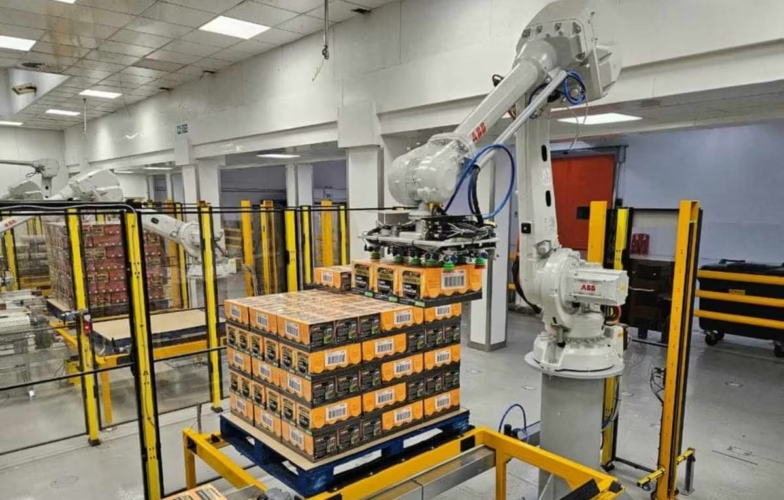
To summarise, automated palletising is the use of robotic systems to stack and secure items onto the pallet before dispatching them. Manufacturers and warehouses are adopting this type of automation within their production lines to improve productivity, quality, and safety.
At RMGroup, we’ve been delivering bespoke palletising solutions to our customers for over 30 years and are trusted by brands such as Bentley, Twinings, and Mars Wrigley.
According to Make UK’s Make Smart 2025 report, 18% of manufacturers are at an early-stage adoption of automation, and a further 4% are still not yet started. So, are you ready to adopt robotic palletising in your production line? Get in touch with us today to find out how we can support your automation needs.